Talking Tudors: Lincolnshire’s Tracy Borman
She has written more than a dozen books, fronts documentaries from the Tower of London and serves as Chancellor of Lincoln Bishop University. But Tracy Borman’s career began in a Lincoln classroom hung with Holbein portraits — and this October she brings her new theatre show back to the Theatre Royal, where she once watched pantomimes as a child. She talks to Lincolnshire Pride about her new novel, The House of Boleyn, and about the county that made her...
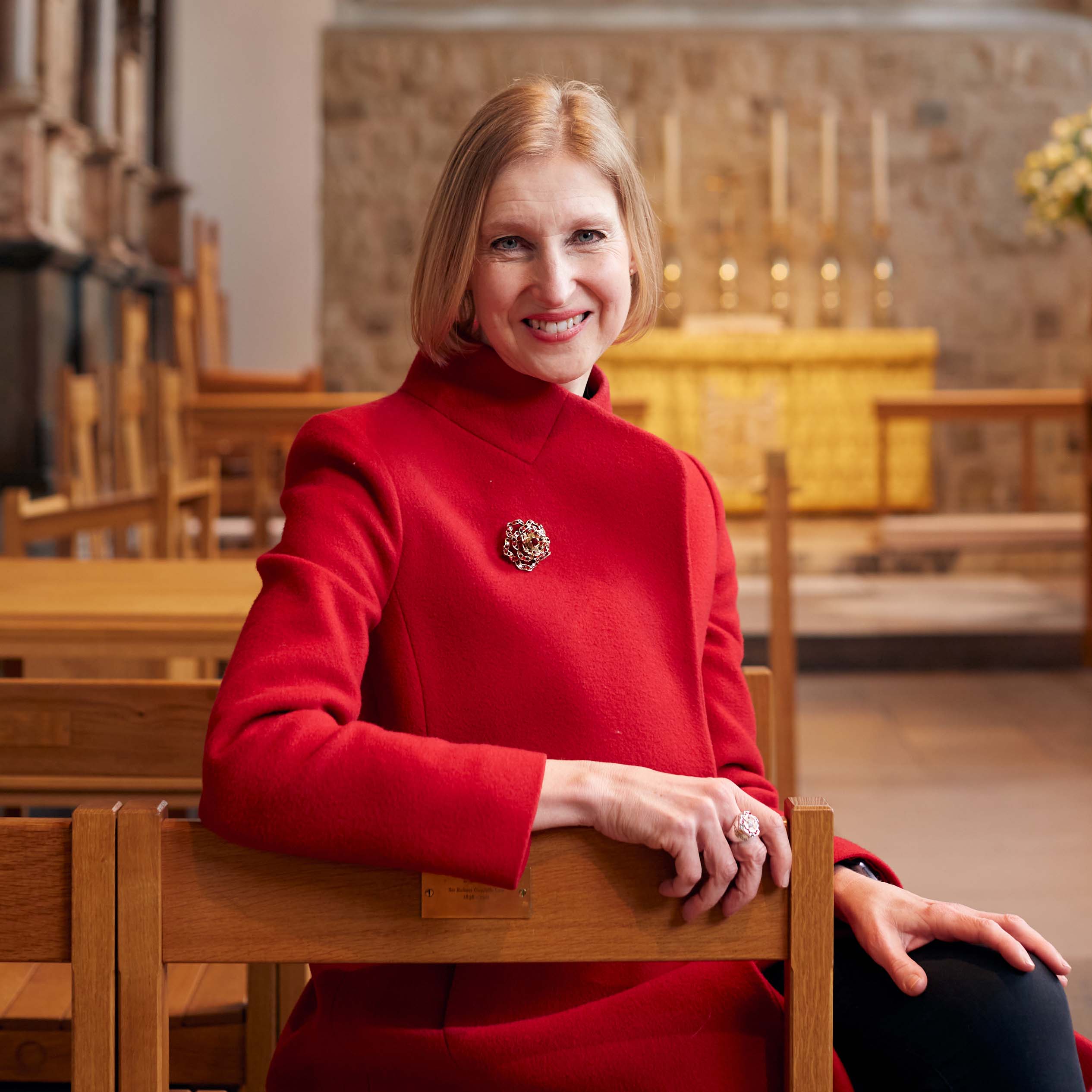
Within seconds Tracy Borman has proudly placed herself. “I’m a Lincoln girl!” she says, and everything that follows makes rather more sense for it. Tracy was born in Lincoln and grew up in Scothern, a few miles north-east of the city.
Today though, she is Chief Historian at Historic Royal Palaces, the charity that cares for the Tower of London, Hampton Court, Kensington Palace, Kew Palace, the Banqueting House and Hillsborough Castle. She was appointed OBE in 2024 for services to heritage. She has been Chancellor of Lincoln Bishop University (known until September 2025 as Bishop Grosseteste) since 2022. And she is, at the moment, on something of a roll.
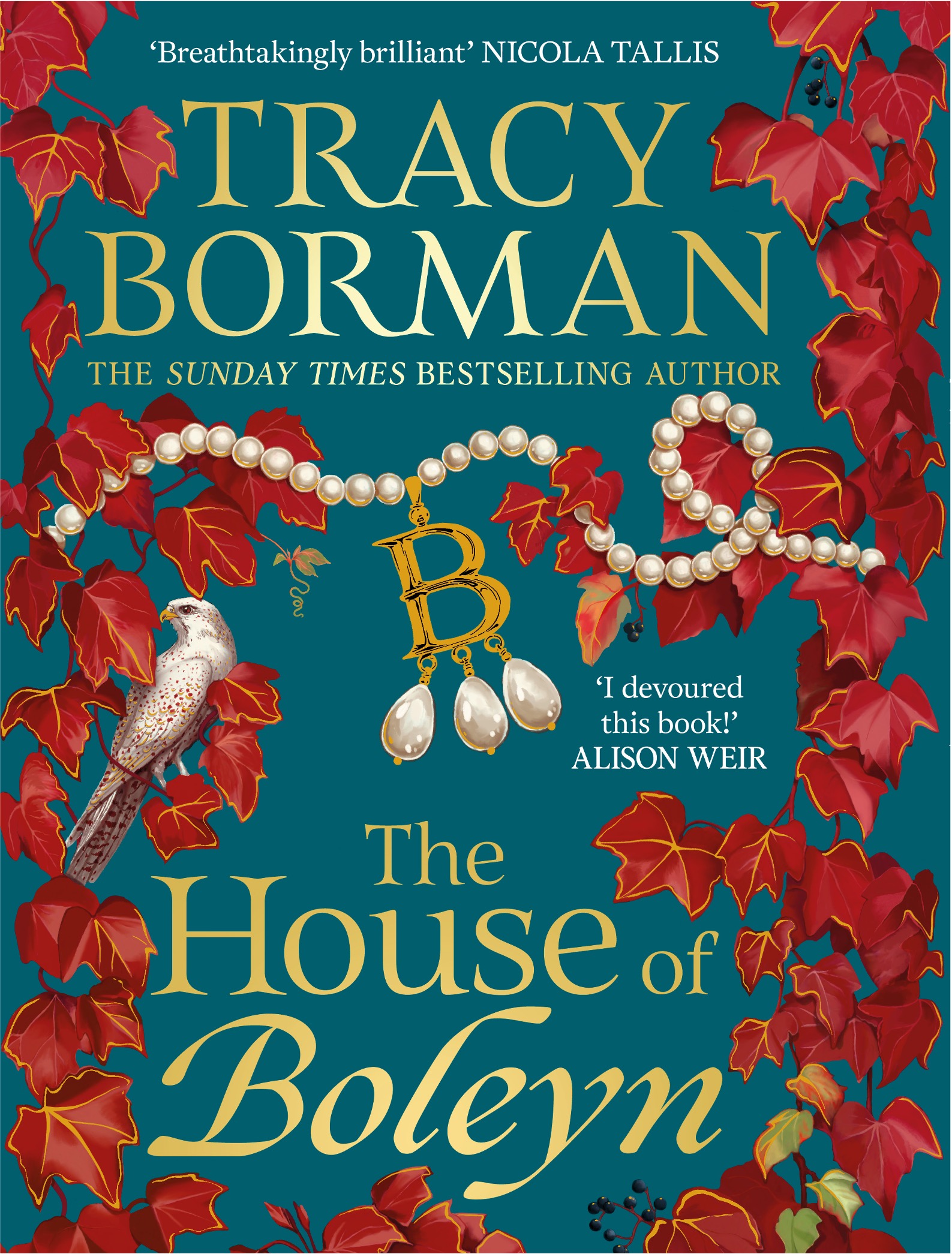
Her new novel, The House of Boleyn, was published by Hodder & Stoughton in April. In October she takes a brand-new theatre show, Tudors on Tour, around the country, including a night at Lincoln’s New Theatre Royal on Tuesday 6th October.
Setting the record straight
The House of Boleyn is a novel, but it is a novel with a thesis. “It’s a novel about the rise and fall of this very famous family from Tudor England,” she explains. “And it’s set entirely at their beautiful home, Hever Castle, because I wanted to show the Boleyns as they really were, not just their famous persona.”
“We know them as courtiers,” she goes on, “but I wanted to show them as their true selves, as human beings, and what they were really like when they were off duty, I suppose, when they were at home at Hever Castle.”
What emerges is a family rather at odds with the one popular history has handed down. The scheming Boleyns of stage and screen (the ruthless father, the calculating daughter) do not, Tracy argues, survive contact with the evidence.
“Typically they’re seen as these scheming, ambitious courtiers, and Thomas Boleyn basically pushes his daughter into Henry VIII’s path for his own personal gain,” she says. “But actually the evidence suggests the opposite. It suggests a very tight-knit family, a loving father-daughter relationship between Thomas and Anne, and that actually the Boleyns didn’t want this marriage between Henry and Anne Boleyn.”
The reason was simple enough. By the time the King’s eye settled on Anne, the family had already seen what his attention could do.
“Henry was known. He had form by this stage. He was a dangerous man. He’d already ruined one of the Boleyn girls, Mary Boleyn. He had an affair with her and then her reputation was in ruins. And I think Anne learned a lot from that.”
“There’s nothing really to suggest that the Boleyns were scheming for this. I think that’s just been an assumption that’s been made. So I’ve tried to set the record straight, if you like, in this book.”
“There’s only so long you can say no to the King of England”
If the family did not want the match, what drove Anne into it? “She tried not to, for seven long years,” Tracy says. “She kept him at arm’s length and meant it when she said she didn’t want to be his mistress. And in fact, she never really was his mistress. And then in the end it becomes inevitable. There’s only so long that you can say no to the King of England. Henry was an unstoppable force, really.”
Nor should we assume Anne was simply swept along. “She was an incredibly clever woman. And in the end, she decided to make the best of it by at least trying to do some good as Queen. She was a pivotal force behind the Reformation, for example. And she had ideas for social reform as well.”
“We shortchange her by just looking at her relationship with Henry VIII. There’s a lot more to her than that.”
It is worth remembering, too, that the Henry who pursued Anne was not the vast and suppurating figure of the late portraits. “Anne was lucky in that she got him at his best,” Tracy says. “He was described as an Adonis by one member of his court, and he was very good looking. He was tall. He was a world-class tennis player and jouster.”
The turn came with a fall in the tiltyard at the beginning of 1536. “He was left with an injury to his leg that became ulcerated, and then he couldn’t exercise and he gained weight.” Within months, Anne was dead.
Anne’s secret heart
Here, though, is where Tracy’s novelist’s hand shows, and where she becomes tantalisingly careful. “I think there might have been an element of attraction on Anne’s part,” she says, “but the research I did for my novel suggests that her heart lay elsewhere. And I can’t give away too many spoilers, but I don’t think it was Henry who she was really captivated by. I think it was somebody else entirely.”
Anne’s heart didn’t lay at the court, but somewhere much closer to home. It’s somebody she knew very well, somebody she’d grown up with. And there’s more than a hint that there was a relationship there. And talk about no smoke without fire.”
“I think there was a genuine love interest and a meeting of minds between Anne and this mystery man. It all ends on that bloody scaffold at the Tower in May 1536, when Anne and her brother George are executed. And then her father loses everything and returns to Hever heartbroken.”
And yet, without giving away the ending, she insists it closes on an upswing. “The Boleyns… yes, it was a sudden and a tragic end, but they had a much greater legacy. They’d changed the course of English history. And of course, I would argue the greatest legacy of the Boleyns was Anne’s daughter, Elizabeth. And she went on to be the longest reigning and the most successful of all the Tudors. So there’s definitely a happy ending there.”
Where the history ends and the imagination begins
Tracy is a historian who writes fiction, which raises an obvious question: what happens when the record runs out? She is relaxed about it, partly because she knows precisely where the gaps are. “There’s a huge amount of material about the Boleyns from the Tudor period,” she says. “You’re right in that there are also gaps, and where there are gaps, it tends to be in the personal, the everyday lives. For example, we know hardly anything about the servants at Hever Castle who attended the Boleyns. And we only have a one-sided view of Anne Boleyn’s relationship with Henry VIII, because all of his love letters to her survive, but none of her replies.”
“That’s where the beauty of fiction is: you can fill some of those gaps with your imagination.”
But there are rules, and she sets them out plainly. “As a historian, I always feel a real responsibility to be very upfront with my readers. I include an author’s note to explain where I have had to use my imagination, and where I’ve perhaps strayed from the known facts. But it’s not very often, I’d have to say, because it’s important for me for this to be an authentic take on the Boleyns.”
Counter-intuitively, she reckons the novels take more research, not less. “Writing a novel almost requires more research, because in order to make it authentic and conjure up the sights and smells and sounds of the era… I spent a lot of time researching what the Boleyns would have eaten, how they would have dressed, how they kept themselves clean, and what Hever would have been like, and that’s changed a lot over the years. I felt like I kind of lived as a Boleyn for a few years when writing it.”
The leap from non-fiction was smaller than you might expect, she says, because her histories were never ivory-tower affairs. “My non-fiction books, they’re popular history rather than academic history, which is very different and very specialised. I write for general audiences. So there isn’t too much of a leap, really. I guess the big difference is you’re making things up in novels, and you’re adding in dialogue.”
“That’s a skill I had to learn, because I was used to writing non-fiction books.” She turned to fiction around eight years ago, with The King’s Witch in 2018. “It’s a joy, because you can let your imagination run wild and you can fill those frustrating gaps in our knowledge with your own scenarios.”
Why fiction at all? “I’m a huge fan of historical fiction myself, so it was a long-held dream. I just thought, I’d love to write a novel one day. They say everyone’s got a book in them. I sort of thought ‘I feel I’ve got a historical novel in me.’”
Tracy has no intention of choosing between the two. “I love the freedom of it. I still love writing my non-fiction, but I like the freedom of fiction as well.” Each book takes about a year, and the running order is more instinct than schedule. “I’ve got two more novels to write after this one, so I’m on a bit of a fiction roll at the moment.”
As for why the Tudors, endlessly: “There’s a reason we’re all so fascinated by them. It’s like you literally couldn’t make it up. There aren’t many other periods of history where you get quite that level of drama and those larger-than-life characters.”
The Boleyns in particular are, she says, “an embarrassment of riches,” which is why they keep turning up on screen and, currently, on the London stage. “It’s not coincidence. The Boleyns are big box office, so it was an absolute joy writing about them.”
The teacher who lit up the Tudor world
Tracy’s career of it traces back to a classroom in Lincoln. “When I was doing my A-levels in Lincoln, it was the Tudors,” she says. “And I had this amazing teacher called Mrs Jones, who still lives in Lincoln. We’re still friends now. And she lit up the Tudor world for me.”
“I remember the walls of her classroom used to have copies of Holbein portraits around them. And she just told stories. She was absolutely incredible as a teacher. So I think I owe my career to Mrs Jones.”
That the two are now in touch again clearly delights her. “It’s lovely to have reconnected, actually.”She had gone through Scothern Primary (now Ellison Boulters Academy) then William Farr at Welton, and Yarborough School in Lincoln, today Lincoln Castle Academy. From there it was up the road to Hull.
“I studied history at the University of Hull. I ended up being there for seven years, because I stayed to do my MA and then my PhD there. I absolutely love Hull. I still love it. And it was fantastic being a student there.” She specialised in the Elizabethan era: “That absolutely fanned the flames.”
From Grimsthorpe to the Tower
The career came the unglamorous way, by volunteering. “I volunteered at Grimsthorpe Castle in the south of the county,” she says of her undergraduate years. “Which is an amazing opportunity. And so that really got me some experience. It helped me then to get a job in heritage.” From there she worked her way up, “but always had this desire to write.”
“My first book was out in 2007, I think. And so I’ve been writing for nearly 20 years. And I do that alongside my career in heritage. So I currently work at Historic Royal Palaces, where I’ve worked for almost 20 years now as well.”
The day job is, by any measure, a good one. “I’m Chief Historian there. So I basically spend my time researching the history of the palaces and communicating it, either writing books for them, or writing for the website, or I spend a lot of time filming and doing podcasts and giving talks. Anything to do with the history of the palaces and who lived there.”
“It’s a dream, really, because obviously a lot of history happened at places like the Tower of London and Hampton Court. To be able to spend my time delving into that and talking about it: it’s fabulous. Everything I do is united by history, which I absolutely love.”
Three days to write, if nothing else gets in the way
How, then, does anyone fit a book a year around all that? Not neatly, is the answer. “I work two days a week for the palaces. In theory, I write for three or four days, but that tends to get squeezed by other things.” Filming, for one: she is mid-way through a new series of Channel 5’s Inside the Tower of London, with series nine only recently on air and series ten due this autumn. Then there are the book tours.
“Often I’m writing on a train or in a cafe, or wherever I can snatch a bit of time for writing. But it’s one of the things that I love most doing. So I’m really, really lucky.”
When she does get a proper stretch, the conditions are non-negotiable. “I’m either in my office or I’m in the British Library. I can’t have music on. If there’s a drilling noise or somebody mowing the lawn, I can’t concentrate. So yeah, I do like complete silence.”
Every book starts with a chapter plan, fiction and non-fiction alike. “And then I research and write as I go, rather than spend two years doing the research and then write it up, because then the book is forming in front of you, and I find it much, much easier.”
The plan survives the non-fiction. The novels have other ideas. “Particularly for the fiction, that tends to take me in directions that I haven’t necessarily envisaged. But it’s nice, it’s a bit more organic. Ideas occur as you’re writing, and it’s quite nice to go with them.”
History is still being written
One of the pleasures of her position, she says, is that even the most picked-over century keeps yielding. “Things are coming to light all the time. For example, metal detecting is quite big now. And in recent years somebody found a gold ring that turned out to have been owned by Anne Boleyn’s father, or her brother George, one of the two, because it was the same crest on it.”
“The British Museum’s just acquired a gold necklace with Catherine of Aragon’s initials on it. So things are turning up all the time, and new documents being unearthed. There’s always something new to learn.”
Coming home
Which brings us to October, and the reason Tracy is especially keen to talk to Lincolnshire readers.
“I’ve got a new theatre show, which is called Tudors on Tour. And it’s really everything you ever wanted to know about the Tudors, but in a really fun way.”
Anyone bracing for a lectern and a glass of water can relax. “It’s a proper theatre show. It’s not just me standing and talking. We’re going to have film footage. We’re going to have music, not Greensleeves, but probably more like 80s music, and props. There’s going to be audience participation. Audiences will have a chance to ask me questions.”
“It’s aimed at everyone who loves history, or just a nice night out at the theatre.”
And the Lincoln date means more to her than a line on a tour poster. “I love the Theatre Royal. I’ve got very many happy memories of going there for pantomimes when I was a kid. And it’s always lovely to be coming back to home turf.”
That homecoming is a regular one. Tracy has lived in London for around thirty years, but the county keeps pulling her back. “I come up to Lincoln regularly, because I’m Chancellor at Lincoln Bishop University. I’m a regular in Lincoln.”
She is also, it turns out, on a bit of a mission, one that any adult who was bored rigid by history at school will recognise.
“People perhaps have had a bad experience at school, where all they’ve learned is dates and nothing very interesting,” she says. “So it’s really nice to then excite people and see that they are wanting to still discover history later on in life. Because it is the sort of subject you can come back to. It’s always there.”
“I really enjoy talking to people who are like, actually, this is great, because we always liked history, but school killed it for me.”
As I pointed out that the national curriculum leaves no room for each school to introduce local history, for instance, the Pilgrim Fathers in a Boston school, she is quick to agree. “Which is a shame, isn’t it? So much history in Boston, and Boston Stump, and all the rest of it.”
Quite. And rather a lot of it, as she would be the first to tell you, still waiting to be written.
The House of Boleyn by Tracy Borman is published in hardback by Hodder & Stoughton. Tudors on Tour comes to the New Theatre Royal, Lincoln on Tuesday 6th October at 7.30pm. Tickets and full tour dates at tracybormanlive.co.uk