Grimsby Fish Market: Inside Britain’s Great Fish Auction
Thirty years young and heir to a heritage stretching back generations, Grimsby Fish Market remains one of Britain’s last great fish auctions — and the heart of Lincolnshire’s proud seafood story
Six Mornings a Week, From 6am
This year, one of the county’s most important food institutions celebrated its 30th anniversary. Grimsby Fish Market is the modern successor to a fishing heritage that stretches back generations — and it remains one of the most important centres of seafood trading in the UK.
Fewer than ten active traditional wholesale fish markets and major port auctions now remain in Britain, placing Grimsby in a select group alongside Billingsgate and Brixham. Six mornings a week, buyers gather from 6am for a traditional shout auction, where speed and expertise are everything. Buyers typically purchase at least a pallet — around 400kg — at a time, and on a busy Monday, when 125 tonnes of seafood may be offered, the entire auction can be over in as little as 45 minutes.
Led by Chief Executive Andrew Oliver, the market handles seafood sourced from around the world — continuing a tradition that began when Queen Victoria opened the Royal Dock, the first modern fishing port in Britain, and Grimsby grew into the largest fishing port in the world.
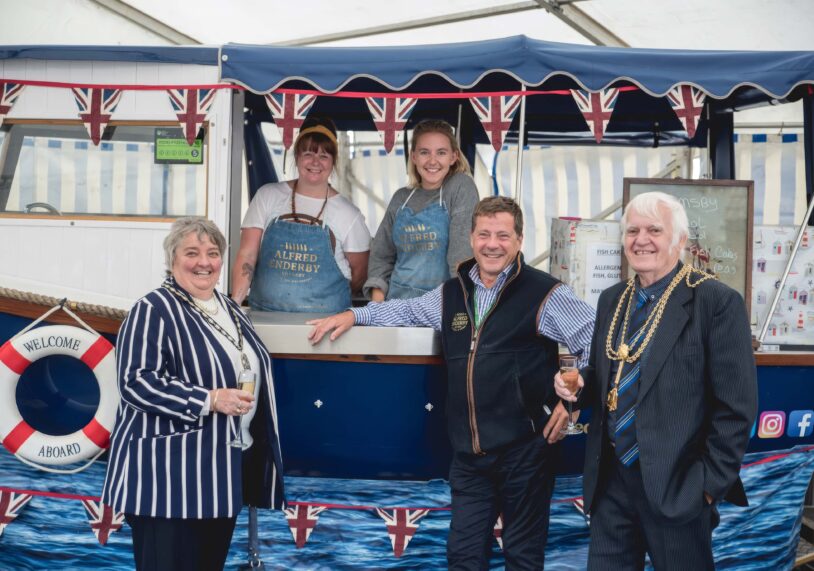
Alfred Enderby: Smoke, Time and Craft Since 1918
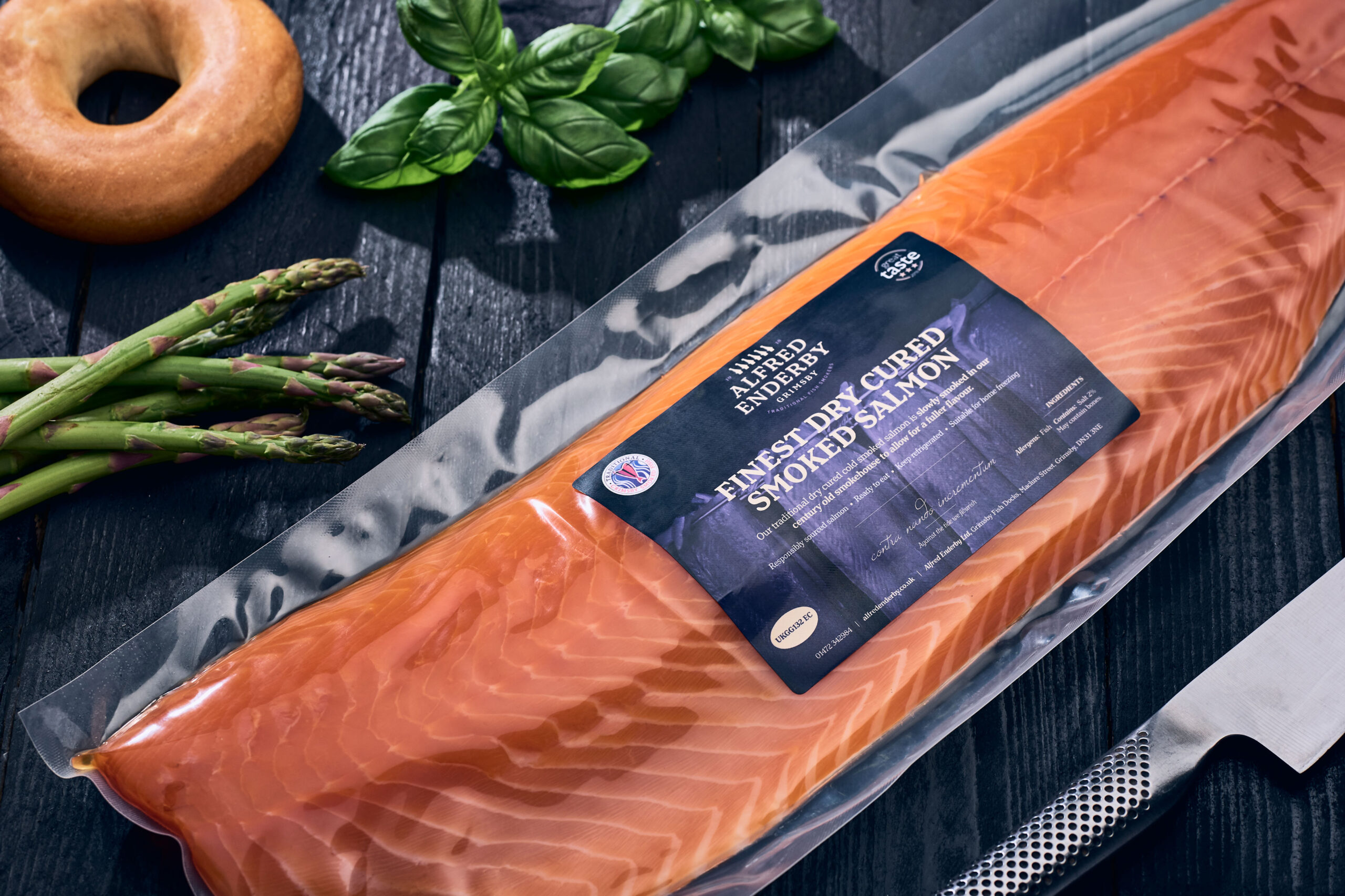
On Grimsby’s fish dock stands Alfred Enderby, the traditional smokehouse that has produced cold-smoked salmon and haddock since 1918. Founded by Alfred himself, the business passed to his son George in 1961 and George’s younger brother Richard in 1974; after more than four decades at the helm, Richard handed ownership in 2016 to Patrick Salmon, a long-standing customer determined to preserve one of Britain’s most distinctive food traditions.
The method has barely changed in a century. In towering brick smokehouses over three storeys high, prepared wood shavings smoulder overnight in deep pits below the fish, and decades of use have built a thick layer of tar on the chimney walls, lending subtle tannins and distinctive flavour. Where many producers smoke fish for around eight hours, Enderby’s smokes for at least 12 — usually 16 — relying solely on time, smoke and craftsmanship.
The results speak for themselves. Traditional Grimsby Smoked Fish earned Protected Geographical Indication status in 2009, placing it among just 87 British foods and drinks recognised for unique regional heritage — company that includes Melton Mowbray pork pies and Cornish pasties. Enderby’s smoked salmon has won admirers including Marco Pierre White, and took three stars — the highest accolade — at the 2020 Great Taste Awards. Visitors can buy direct from the smokehouse, with smoked salmon from £27 for 500g.
Cockles, Mussels and the Return of the Oyster
Lincolnshire’s seafood story extends down the coast. Boston remains one of Britain’s most important shellfish ports, with around 20 boats leaving London Road quayside to harvest cockles and mussels from The Wash, roughly 10 miles offshore. Cockles are gathered between June and late autumn, raked carefully by hand at low tide — a sustainable practice that protects bird populations and preserves stocks. In winter, attention turns to mussels grown on managed beds known as ‘lays’.
There is even hope for the Humber’s lost oyster reefs: as part of the £2.5 million Wilder Humber project, 250,000 native oysters have been introduced at Spurn Point to create new habitats, improve water quality and support marine life.
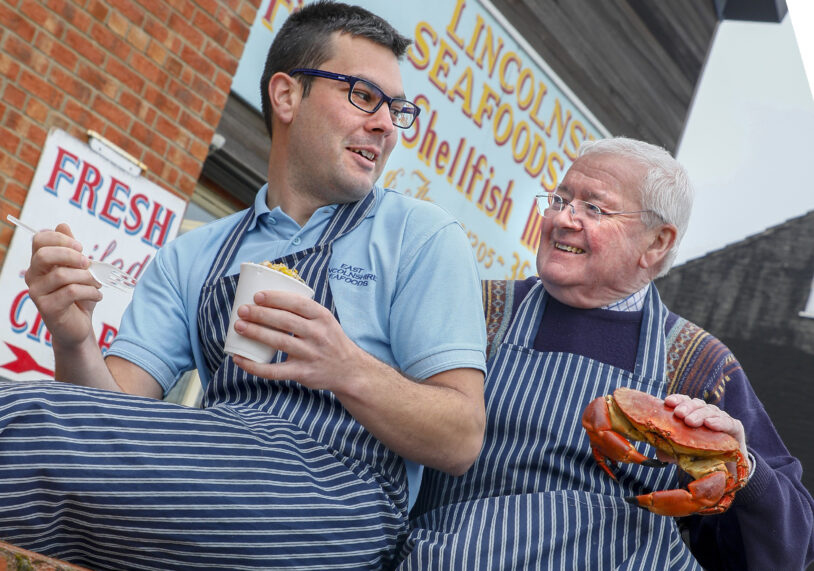
And Yes — the Fish and Chips
No seafood story here is complete without the nation’s favourite. The UK’s roughly 10,500 fish and chip shops serve 382 million meals a year, and Lincolnshire holds its own proudly: the Elite Fish & Chip Company, founded in 1972 and now third-generation family-run, was named among the National Federation of Fish Friers’ Top 20 Takeaways for 2025; Linfords of Market Deeping is consistently ranked among the UK’s best; and Papa’s on Cleethorpes Pier — founded in 1966 — claims to be the world’s largest chippy, with over 500 seats.
Frequently Asked Questions
Can you visit Grimsby Fish Market?: The market is a working wholesale auction operating six mornings a week from 6am; visitors can buy smoked fish directly from Alfred Enderby on the fish dock.
Why is Grimsby famous for fishing?: Grimsby grew into the largest fishing port in the world after Queen Victoria opened the Royal Dock, Britain’s first modern fishing port.What is Traditional Grimsby Smoked Fish?: A PGI-protected regional speciality, cold-smoked in brick smokehouses for 12–16 hours — one of just 87 protected British foods and drinks.