
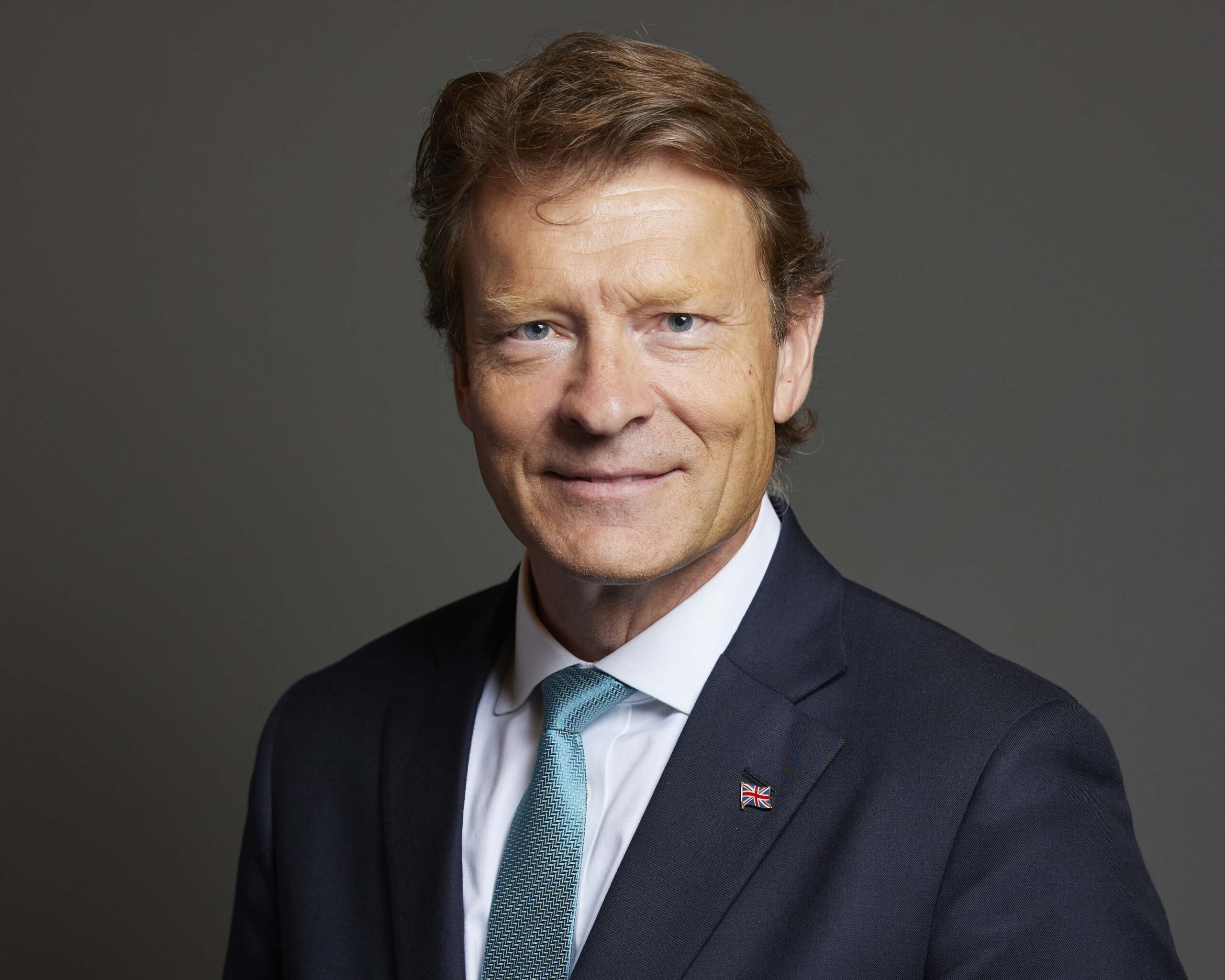
Who is Richard Tice?
As Rachel Reeves prepared to deliver the budget that will make or break the finances of individuals and small businesses in 2026, we met the man who has his eyes on the future of Britain, and could be the next occupant of 11 Downing Street from 2029. Reform UK’s Lincolnshire MP, Richard Tice, is tipped by many to be our next Chancellor
British people aren’t used to disruption. We queue in an orderly fashion. The smallest flake of snow on the roads puts us in a tizz. And a bank holiday bin collection change is tantamount to the breaking down of our established social order. Accordingly, our political system has been consistently and unfailingly predicated on just two parties politely (usually) jostling for power since 1906, the last time a non-Labour or Conservative government won a general election (if we exclude coalitions).
But in the past couple of years, a monumental paradigm shift in British politics has emerged. Reform UK has ceased to be a disruptor or a footnote on the ballot paper, and now looks to be the next party to lead Britain. For a party that’s less than six years old, that’s seismic.
Lincolnshire, Rutland, and Stamford are among the areas where Reform UK is making huge gains. And if, as the polls predict, they come to power in or before 2029, we’d put money on the party’s incumbent Boston & Skegness MP, Richard Tice becoming our next Chancellor. Not that he’ll admit it. Instead, Richard insists that he serves at Nigel Farage’s pleasure.
The latter is the boss and no place in a future cabinet should be assumed. What can be assumed, though, is that if a General Election were to take place right now, Reform UK will no longer be considered an outlier. In fact, most polls have Reform UK at least ten percentage points ahead of Labour and the Conservative Party.
At the time of writing, Reform UK would secure a 27% share of votes, Labour following with 18%; the Conservatives on 17% and the Green Party and Liberal Democrats at 16% and 15% respectively. That suggests Reform UK would still be 15 seats short of an overall majority, but with just five MPs in Westminster now, and for a party established for little over six years, such figures would represent a paradigm shift in British politics with its traditional two-party political system.
Raised in Surrey and educated at Uppingham School, Richard’s career has seen him establishing small, medium and large businesses in the property investment market, as well as serving as Chief Executive for the housebuilding and commercial property company founded by his grandfather, The Sunley Group.
A year and a half ago, Keir Starmer was very keen to usurp Rishi Sunak as Prime Minister, while Rachel Reeves was eager to get started in her role as Chancellor. She described it as a historic responsibility and the ‘honour of her life.’ The mood soon soured.
Almost immediately the Chancellor identified a £21.9bn ‘black hole,’ and if the Treasury had a pound for every time Starmer, Reeves or any other member of the cabinet justified their struggles with reference to ‘the mess we inherited,’ we probably wouldn’t be facing our current financial precipice. Richard Tice, though, remains optimistic despite the numbers.
“The total national debt is around £2.6 to £2.8 trillion; over 94% of GDP. The way to think about it is that the government is effectively borrowing against the value of your home.”
“Let’s say the average house price is about £275,000, in which case, each year an extra £5,500 of debt is being added to that value. If you keep spending more than you earn, eventually the lender says, ‘Stop. I don’t think you can pay me back.’ That’s where we’re heading, and that’s what worries me.”
Richard describes the situation as catastrophic. “Growth is flatlining. The last three months have shown no growth at all, jobs are down in the private sector, and yet the government keeps increasing spending and creating regulations,” he says. “You can’t keep borrowing without growth. It’s a sugar rush for the public sector, funded by debt. That’s not sustainable.”
Rachel Reeves prepares to unveil her budget as Pride goes to press, and addressed national apprehension with her pre-budget speech in early November. But it’s already the worst-kept secret in the world that taxes will rise. The forecast for the British economy was a 2025 deficit of about £118bn, but Richard reckons it’ll be closer to £140bn-£160bn. Meanwhile, the Labour party pledged not to raise income tax, NICs or VAT which represent, respectively, 28%, 18% and 17% of government revenue, and 63% of government revenue collectively.
Growth for the first half of 2025 was 0.7%, falling to near-zero in the latter half of the year, and while the public sector is artificially inflated, the private sector is already in recession. Bond markets, too, which the government uses to borrow money, have reached yields of 5.7%, increasing the cost of borrowing and compounding an already perfect storm which will result, Richard predicts, in a financial reckoning.
“You never know exactly what will trigger a crisis in the gilt or bond markets. Sometimes it’s an external shock, sometimes the markets simply lose confidence. But months of no growth and excessive borrowing will lead to a moment when the bond markets say ‘enough’. And then we’ll be in trouble.”
“I’m not saying it’s probable (but it’s possible) that there will be a financial drama over the next couple of years. I think both Keir and Rachel will be lucky to remain in their current roles a year from now, and I don’t think she’ll last as long as he will.”
Among those affected by financial turmoil at macroeconomic level are individuals and small businesses. The better news, though, is that Richard doesn’t advocate tax rises for either, but rather, a reduction in public spending and red tape.
“You can’t tax your way to prosperity. The only way you solve this is by cutting waste and encouraging growth. If you reduce unnecessary regulations, you create financial headroom, encourage investment, and start generating real economic momentum. Then, and only then, can you deliver performance-related tax cuts.”
“We will scrap inheritance tax, completely. For farmers, for all business owners. It’s driving successful people out of the country. People are moving abroad to protect their wealth. We need them to stay, to invest, to take risks. Making money is a good thing. Working hard is a good thing. We should celebrate success, not resent it. Scrap inheritance tax, and you’ll bring back talent and capital.”
“At the moment, small businesses are thinking, ‘Why bother?’ because the system punishes effort. We’ll scrap IR35, scrap inheritance tax, cut daft regulations. That will help farmers, family businesses, and entrepreneurs across the board.”
Richard advocates cutting corporation tax, especially, as a way to encourage growth in the economy utilising Britain’s 5.5m small and medium-sized enterprises. It’s an approach that echoes the Cameron/Osborne government.
“George Osborne did really well with corporation tax. He gave a direction of travel over a seven or eight-year period and aimed to bring corporation tax down from 28% to 17%. They got down to 19% and then Rishi Sunak bottled it. As they lowered the rate, though, tax receipts actually went up, not down, because of the Laffer Curve.
That’s the idea that there’s an optimum rate where people are encouraged to work, invest and take risks. If you tax too much, they stop. They work less, or they leave. If you tax less, they invest more and you actually get higher revenues over time. It’s well-proven.”
Another frustration Richard believes has an adverse effect on SMEs is red tape, regulation and government bloat (at national and local government levels) which Richard says a Reform government will tear through when they come to power.
“We’d cut wasteful government spending, cut unnecessary regulations, renegotiate council contracts. We’re already doing that in local authorities we control, saving hundreds of millions. There are vast amounts of waste and duplication in the public sector. We need to stop it.”
“And as citizens or as those who run small businesses, we all want smart, safe regulation, but not daft regulation. GDPR, for example, with its endless cookie pop-ups and bureaucracy has been a disaster for productivity. It’s a drag on progress, particularly in sectors like healthcare.”
“Running a country isn’t exactly like running a business, but the financial principles are the same. You can’t spend more than you earn. You’ve got to run lean and efficiently, otherwise, you spend too much and go bust. That’s true in business, and it’s true of government.”
Richard is also an advocate of hybrid public-private ownership models. “I’m not saying we nationalise everything, and we can’t afford that anyway. But we can run essential services like joint ventures, sharing risk and reward. Look at Norway, which took a share of North Sea oil profits and built the world’s largest sovereign wealth fund. We can learn from that.”
Healthcare, social care, and utilities could benefit from similar models, he believes. “If you align incentives (so that both the taxpayer and the provider benefit when things go well), you get better results. When you have bad years, you both take the hit and improve. When you have good years, you both profit and reinvest. That’s partnership. It eliminates complacency.”
Locally, too, Richard’s priorities are clear. “Rural broadband and digital connectivity are vital as they’re great levellers for businesses. We need to support tourism in Skegness, protect the coastline, and extend occupancy rights for caravan parks to create year-round local economies. That would increase council tax revenues, create homes, and stop the boom-and-bust cycle.”
“We’ve got a housing shortage because we’ve had uncontrolled population growth. It’s basic supply and demand. There are hundreds of brownfield sites sitting empty in Lincolnshire towns. Let’s incentivise their redevelopment rather than building on farmland. Turn old offices into residential units. Allow people to build small annexes for family members without reams of planning permission. We should also encourage multi-generational living, as it eases the burden on social care.”
“There’s so much potential here and Lincolnshire and Rutland represent traditional rural England: hardworking areas that are community-minded with a population grounded in common sense. Our policies fit naturally here.”
Of all Reform UK’s politics, though, the conversations that have drawn the most criticism and praise (in equal measure) are its leaders’ insistence that changes must be made to control immigration, and that a tougher approach to illegal immigration is necessary.
“In places like Boston and Skegness, the population has grown dramatically without matching infrastructure; no new hospitals, schools, or housing. It’s not fair on residents, it’s not fair on taxpayers, and it’s not sustainable.”
For most of his life Richard was a member of (and a donor to) the Conservative Party, as well as a Eurosceptic from the late 1990s when he served as Director of the Campaign Group Business for Sterling. In July 2015 he co-founded the pro-Brexit campaign group Leave.EU and The Brexit Party in November 2018. The party changed its name to Reform UK in October 2020 and served as its leader before Richard invited Nigel Farage to become the party’s leader, effectively making the latter Prime Minister-in-waiting.
“Immigration is a matter of economics and fairness, not prejudice. We welcome smart, skilled immigration, in numbers the country can absorb. In the 1980s and 1990s, net migration was between zero and 50,000 a year, and we grew at 2.5% to 3.5% a year. Then Labour opened the doors. Now, after 15 years of mass low-skilled immigration, productivity is falling and wages have been suppressed. The OBR has admitted that most low-skilled immigration costs more than it contributes.”
“We’ve got over 10,000 foreign nationals in UK prisons; they should be sent home. We need a system that works. Legal immigration should benefit the host nation; illegal immigration must be stopped. We’ve set out a policy for large remote detention centres and rapid deportation. If people want to avoid that, fine; we’ll pay them a small amount to leave voluntarily, and quickly. But the law has to mean something.”
“The issue isn’t someone’s skin colour or religion. It’s about contribution. It’s about whether people come here to work and add value. Illegal immigration breaks the law and it can be tackled. It just needs courage and leadership to detain and deport the people who are coming across on dangerous boats, costing billions and billions of pounds, and harming confidence in the political class. Legal immigration should serve the country’s needs, but illegal immigration is really dangerous. It sees people coming over as sort of criminal slaves to carry out illegal activities involving drugs, money laundering and so on. They don’t share our culture or our values, and you cannot tolerate broken laws.”
Richard shrugs off labels like ‘far right’ or ‘populist.’ “Throw whatever labels you like, but the British people have good instincts. They can see who’s talking sense. Politics in Britain has been completely upended thanks to Reform,” says Richard.
“Those who dislike the party will always try to smear us, to paint us as something we’re not. But on average, Reform is ten percentage points ahead. In one of this week’s polls, Labour were fourth, behind the Greens, with the Conservatives in third. That’s extraordinary. People are waking up and realising they have more choice. That’s healthy for democracy.”
“Are they really saying that a third of the population (those who say they would vote for us) are racist? It’s nonsense. People can see through it. We’re a party with the courage to talk about difficult issues and to apply common sense to policy. We’ve been in business, we understand the real world.”
“For years, people have taken for granted that politics in Britain is a two-party system, that it’s either Labour or Conservative. But that’s changing. We’re now a serious option for voters. I wouldn’t say we’re mainstream in the sense of the old establishment parties, but we’re absolutely in the mainstream of people’s thinking and absolutely ascendant in counties like Lincolnshire. That’s because we’re talking about immigration, energy, and net zero, issues other parties were always too scared to discuss.”
On that last topic, Tice is at his most outspoken. “Net zero is the greatest act of financial self-harm this country has ever undertaken. I call it ‘net stupid zero.’ Only three to five percent of global warming can be attributed to the activities of humans, and the short-term risk is that we’re destroying jobs with high energy prices, including thousands in Lincolnshire. And we’re covering our best farmland with solar panels (such as the 2,000 acre Mallard Pass Solar Farm in Stamford and Rutland) instead of growing British food. It’s insanity.”
“There are plans for a hundred square miles of solar farms in the county, some already approved. Entire villages are being surrounded by panels and pylons. It’s madness. We’ve set up a campaign called Lincolnshire Opposes Renewable Eyesores. If we win the next election, we’ll repeal and scrap net zero.”
Richard has already made 150 speeches in the Commons, and he always speaks without notes, giving interviews without the aid of autocue. At 61 years of age and with three older children, I put it to him that he could enjoy retirement instead of beginning a new career in 2029, if Reform UK proves successful in the election. It seems, however, that he’s a glutton for punishment… or at least, for politics.
“I’ve always cared about current affairs. There’s a clip of me on Question Time in 2001 challenging the Prime Minister about the Euro. When you speak from the heart, people respond. I always said that once I’d made my way in business, I’d try to give something back. I enjoy it, and it’s not a job, it’s a passion. I can’t say where the country will be when a General Election is called, but we’ll be prepared. I’m an optimist, I believe Britain can recover and if we have the courage to do things differently, we can make a difference.”
Richard Tice is MP for the constituency of Boston and Skegness and was the co-founder of Reform UK.