The Leicester Space Centre: Artemis and Beyond
This year represents two milestones in space exploration, one of which is 384,400 km away, one is somewhat closer to home. As Pride goes to press, Artemis II was due to blast off, returning humans to lunar orbit for the first time since 1972, whilst Leicester’s National Space Centre celebrates its 25th birthday as Britain’s most out of the world attraction
This year represents two milestones in space exploration, one of which is 384,400 km away, one is somewhat closer to home. As Pride goes to press, Artemis II was due to blast off, returning humans to lunar orbit for the first time since 1972, whilst Leicester’s National Space Centre celebrates its 25th birthday as Britain’s most out of the world attraction
In 2026, the National Space Centre in Leicester celebrates its 25th birthday — a milestone that arrives at a moment when space exploration is once again capturing public attention.
As NASA’s Artemis II mission prepares to carry astronauts around the Moon for the first time in more than half a century, the reasons for continuing to explore space feel newly relevant. They are also, as Dhara Patel, Space Expert at the National Space Centre, is keen to point out, far closer to everyday life than many people assume.
For Dhara, space has always been part of the local landscape. Growing up in Leicester, she visited the National Space Centre as a child shortly after it opened in 2001. “I would have been about ten,” she recalls. “Even before you walk through the doors, you’re already in awe.”
“You see the Rocket Tower as you arrive, and you’re not even inside yet — but you already feel inspired, it’s hard not to be!”
That sense of scale is intentional. Built at a cost of £52 million following a successful Millennium Commission bid led by academics from the University of Leicester, the National Space Centre was conceived not simply as a museum, but as a living, evolving showcase for space science.
The National Space Centre occupies a site that was once disused industrial land and now welcomes around 300,000 visitors every year, including tens of thousands of schoolchildren. Leicester, Dhara explains, is a fitting home. Space research at the University of Leicester dates back to the 1960s, and since 1967 there has been at least one piece of Leicester-built instrumentation operating in space every single year.
“That’s one of my favourite facts,” she says. “It doesn’t mean something new launches every year, but it does mean that Leicester has had a continuous presence in space for nearly six decades.” Today, that legacy continues next door at Space Park Leicester, where university researchers work alongside industry partners including the UK Space Agency and Rolls-Royce, blending academic research with real-world application.
Inside the National Space Centre itself, the experience is carefully curated and surprisingly extensive. Dominating the skyline are two real rockets — an American Thor Able and the British-built Blue Streak — housed within the iconic Rocket Tower.
Inside the main building, visitors are greeted by a genuine Soyuz spacecraft suspended above the café. “It’s real, but it hasn’t flown,” Dhara explains.
“We have all three sections of the spacecraft, and its external features date it between 1967-1971, which means it’s the earliest and most complete Soyuz vehicle on display in the Western world.”
Elsewhere, the galleries unfold in a clear, logical sequence. The Rocket Tower charts early rocketry through to Apollo, while surrounding galleries explore human spaceflight, the wider universe, our solar system and, increasingly, our own planet.
The Home Planet gallery, one of the newest, focuses on how satellites monitor Earth’s climate, oceans and ecosystems. “It helps people realise just how interwoven space has become with everyday life,” says Dhara. “We rely on it far more than we often notice.”
“Space is one of those things that everyone can connect to,” she adds. “All you have to do is look up at the night sky. But at the same time, it’s incredibly distant. Most of us will never go there, so it’s both near and far at the same time.”
That distance, she believes, gives space its power to humble. Iconic images such as the ‘Blue Marble’ photograph helped spark modern environmental thinking by showing Earth as fragile and finite. “You suddenly realise how thin our atmosphere is,” Dhara says, “And how important that tiny layer really is to making life possible.”
There is also a practical case for exploration. Thousands of satellites now orbit Earth, underpinning everything from GPS and communications to weather forecasting and streaming services.
Space technology feeds back into everyday life in less obvious ways too — from medical devices to materials science. Memory foam, for example, was originally developed to protect astronauts during launch; other innovations have found applications in healthcare and even heart devices, materials like scratch resistant lenses and temperature regulating technology like that used in goalkeeper gloves were first envisaged for use in space.
This is where Artemis II comes in. While the mission will not land on the Moon, it is a crucial step towards sustainable human exploration beyond low Earth orbit.
“To do that,” Dhara explains. “We have to solve challenges around communication, materials, power and energy — and those solutions don’t just stay in space. They come back to Earth with us.”
At the National Space Centre, these ideas are translated into accessible experiences. The UK’s largest planetarium sits at the heart of the building, offering a mix of live presentations and in-house produced films.
A new show, One Step Beyond, directly ties into the Artemis programme, charting humanity’s journey from low Earth orbit to the Moon and, eventually, Mars.
Importantly, the Centre never stands still. Space knowledge evolves rapidly, and galleries are regularly updated. A newly redeveloped outer solar system section is due to open as part of the 25th birthday celebrations, ensuring that returning visitors always find something new to discover.
“We’re not a static museum,” Dhara says. “Space is an ongoing story, and our role is to keep up with it and share it accurately.”
That mission extends beyond exhibitions, through live talks, hands-on activities and community outreach delivered by a dedicated science communication team.
As the National Space Centre looks ahead to its next 25 years and as Artemis prepares for launch, the message is clear. Space exploration is not a distraction from life on Earth, but a way of understanding it better.
For readers of Pride, too, the ongoing story of space is waiting just down the road in Leicester… not a million miles away. In fact, not even 384,400 km away.
The National Space Centre is based on Exploration Drive, Leicester LE4 5NS, open seven days, from 10am, call 116 261 0261 or see www.spacecentre.co.uk.
Read the full story in our March 2026 edition at https://www.pridemagazines.co.uk/rutland-and-stamford/view-magazines?magazine=March-2026
Artemis II and Beyond
As we write this feature Artemis II has completed its 0.82mph journey to the Kennedy Space Centre’s Launch Pad 39B. The earliest date that the rocket could blast off was 6th February, but this was delayed due to a hydrogen leak during a ‘wet test’ (i.e.: a ‘dress rehearsal’ of the launch with a fully-fuelled rocket). Other opportunities are scheduled for March and April.
The mission is referred to as Artemis II, although the rocket itself is more correctly known as the Space Launch System, or SLS. Standing 98 metres tall, the rocket comprises of two solid rocket boosters flanking the Core Stage powered by four RS-25 engines, and 8ft in diameter. On the top of the SLS is the Orion spacecraft which itself consists of the Service Module, Crew Module and Launch Abort System.
The whole SLS will weigh 2,604 tonnes when fuelled, it will travel at up to 2,670 miles per hour and it will take the crew from launch to 534,564ft altitude in eight minutes.
On board the Orion module will be Nasa’s Reid Wiseman, Victor Glover and Christina Koch and Canadian astronaut Jeremy Hansen. The crew’s 10 day mission will see them complete a crewed lunar flyby, which will see them travelling over 10,300km.
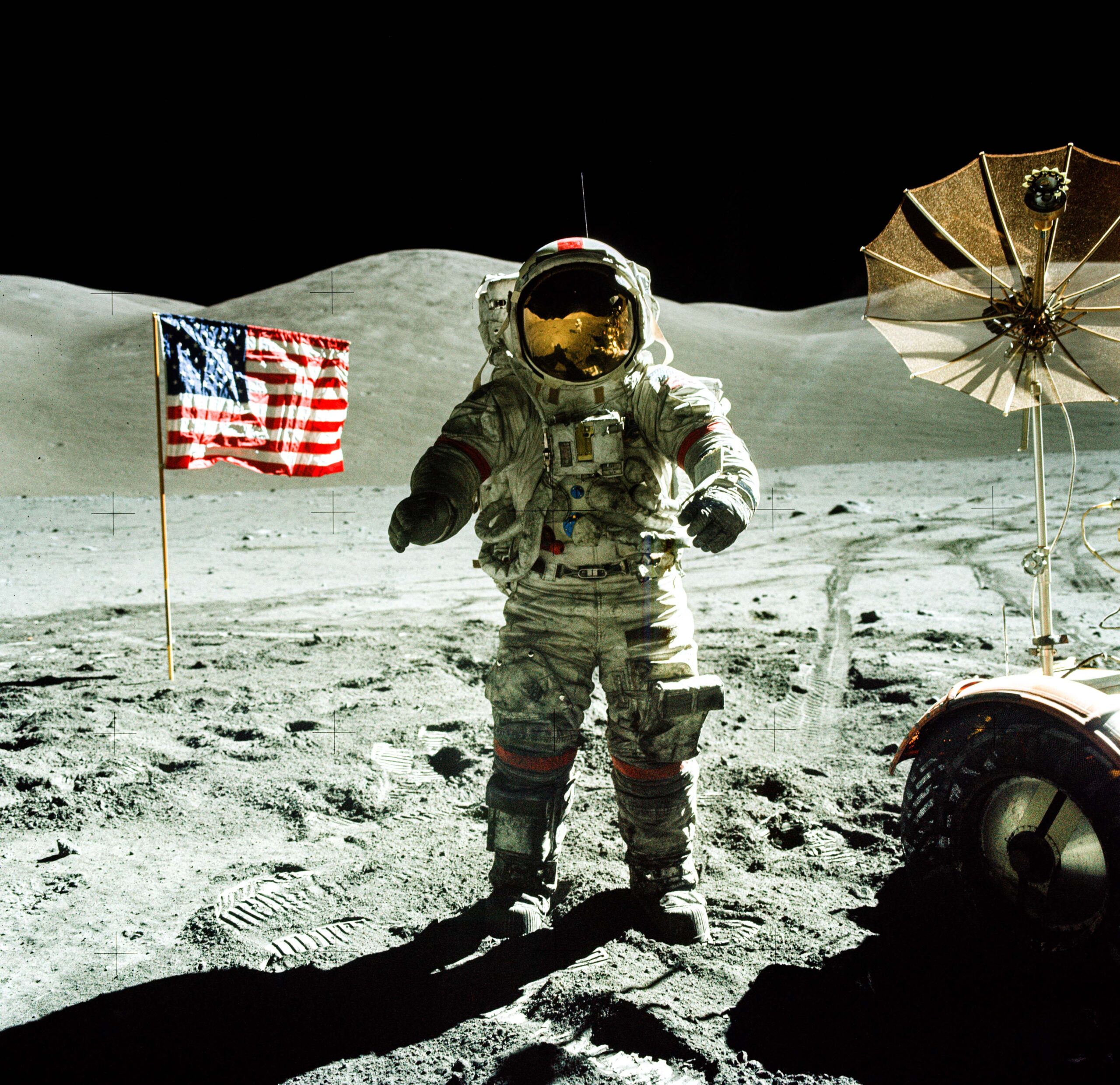
Artemis I launched in November 2022 and returned to Earth on 11th December. Its purpose was to test the SLS and especially the Orion module prior to a crewed mission. Artemis II will be the crewed flight which serves as a precursor for Artemis III, the mission that will is scheduled for mid-2027 and will return humans to the surface of the moon for the first time since Apollo 17 in 1972.
Artemis III will also see the crew establish a lunar base on the south polar region of the moon, with two astronauts remaining on the surface of the moon for about a week, establishing the first base on the moon. Artemis IV toward the end of the decade will establish the Lunar Gateway space station which will be created in the moon’s orbit for further lunar exploration. A total of 11 Artemis missions are planned taking the project up to 2036 and paving the way for an extended human presence on the moon, perhaps even a permanent colony. Victor Glover and Christina Koch will be the first person of colour and the first woman to travel to the moon respectively.