Susannah Fish: Rutland’s new High Sheriff
From Chief Constable to Rutland’s new High Sheriff, Susannah Fish brings a lifetime of public service to one of the country’s oldest offices, using her year in post to champion justice, community and the quiet work that makes a real difference
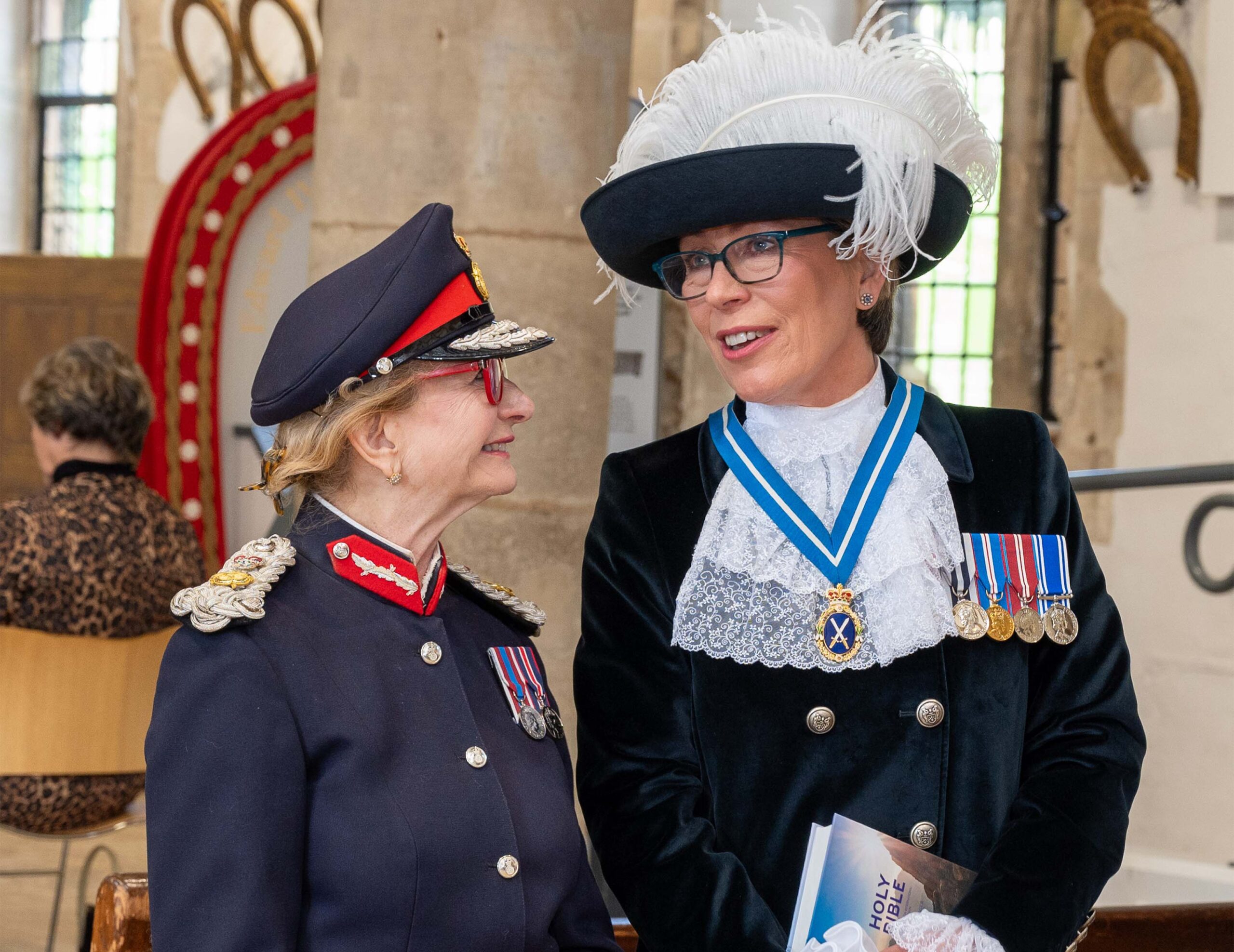
There’s a new sheriff in town (county, actually), and Susannah Fish is no stranger to promoting happy, safe communities. After more than three decades spent at the sharp end of policing, culminating in her role as Chief Constable of Nottinghamshire Police, she now steps into one of the oldest offices in the country.
The Office of High Sheriff dates back over a thousand years, to a time when the ‘Shire Reeve’ acted as the Crown’s principal agent within each county. Today, the role is no longer executive, but its purpose remains rooted in justice, community and public service. The modern High Sheriff supports the judiciary, attends civic functions, and works closely with organisations across the county, from the police and probation services to voluntary groups and charities.
Susannah’s professional journey began over 30 years ago in Nottinghamshire Police, where she would go on to build a distinguished career. Along the way she served in the West Midlands, led national work on gun and knife crime from the Home Office, and became a leading voice in tackling serious violence.
“I was a police officer for over 31 years,” she says, reflecting on a career that took her from frontline policing to national leadership. She recalls the early 2000s in Nottinghamshire, when gun crime reached troubling levels and demanded decisive action, describing it as “a horrific time,” but one that shaped her operational outlook and enabled her to leave the legacy of a better, safer area.
Yet it is not only her work on crime that has defined her legacy. In later years, Susannah became known for challenging accepted norms within policing and the workplace more broadly. She introduced the first menopause policy within a UK police force, recognising an issue that had long been overlooked despite affecting a significant proportion of the workforce.
“It was just about how we understood menopause as a natural part of life that every woman goes through,” she explains, noting that at the time such thinking was far from widely accepted. Similarly, her decision to recognise misogyny as a hate crime marked a turning point in how policing could respond to the lived experiences of women.
That same sense of purpose underpins her decision to accept the role of High Sheriff. While the position is ceremonial and apolitical, it offers a platform to continue making a difference, albeit in a different way.
“It’s about continuing to make a difference,” she says, “and shining a light on good stuff in communities where people are working really hard.”
For Susannah, it is this broader community engagement that is most compelling. Having lived in Rutland for seventeen years, she speaks with genuine affection for the county. What began as a temporary move quickly became permanent.
“We came for 12 months… and we haven’t moved since. No intention of it. It’s just such a wonderful place to be,” she says.
Drawn by a strong sense of community, a rich heritage and an optimism that is palpable across its towns and villages, Rutland has clearly become home and its scale, she says, is part of its strength. With a population of just over 40,000, connections are more immediate and visible.
“I think there’s a real strong sense of community.” During the pandemic, this was particularly evident, as communities came together to support those who were vulnerable or isolated.
For Susannah, it was a powerful reminder of the importance of human connection, something that extends beyond digital communication into genuine relationships and mutual care. This emphasis on community will be central to her year in office.
While she will fulfil the traditional duties associated with the role, including supporting the courts and engaging with the criminal justice system, Susannah is equally keen to spend time with the voluntary sector.
From small village groups to established charities, these organisations form the backbone of community life, often operating quietly and without recognition.
One of her priorities is simply to acknowledge that contribution. “They don’t think what they’re doing is special, but actually what they’re doing is special,” she says of the volunteers she has already met in her first weeks in office.
Her chosen charity for the year, Warning Zone, reflects her longstanding interest in prevention and education. The organisation provides immersive safety education for young people, addressing everything from fire and water safety to online risks, ensuring that children are equipped with the knowledge they need to navigate an increasingly complex world.
Alongside this, the High Sheriff’s charitable fund will continue to provide small grants to local groups, enabling grassroots initiatives to flourish. The grants are another example of how the role can have a tangible impact at a local level.
Susannah is clear that her focus will be inclusive. From schools to care homes, from young people to older residents, she intends to engage with all parts of the community.
“We’ve only got 41,000 people… it made sense to focus on the whole of Rutland,” she says. Rutland may be small, but it is diverse in its needs and experiences, and she sees value in understanding and supporting that full spectrum.
To a role steeped in history, Susanna brings a contemporary perspective shaped by experience, empathy and a clear commitment to making a difference.
See www.rutlandhighsheriff.com.