Gardening in November
By Dr Mark Lane.
November brings plenty of practical jobs, but wet days offer time to plan next year’s garden. Browse plant, bulb and seed catalogues, then shortlist a few favourites: your ‘November naughtiness’. Review photographs of borders and containers to identify gaps, plants needing relocation and combinations worth repeating before buying.
Leave something standing
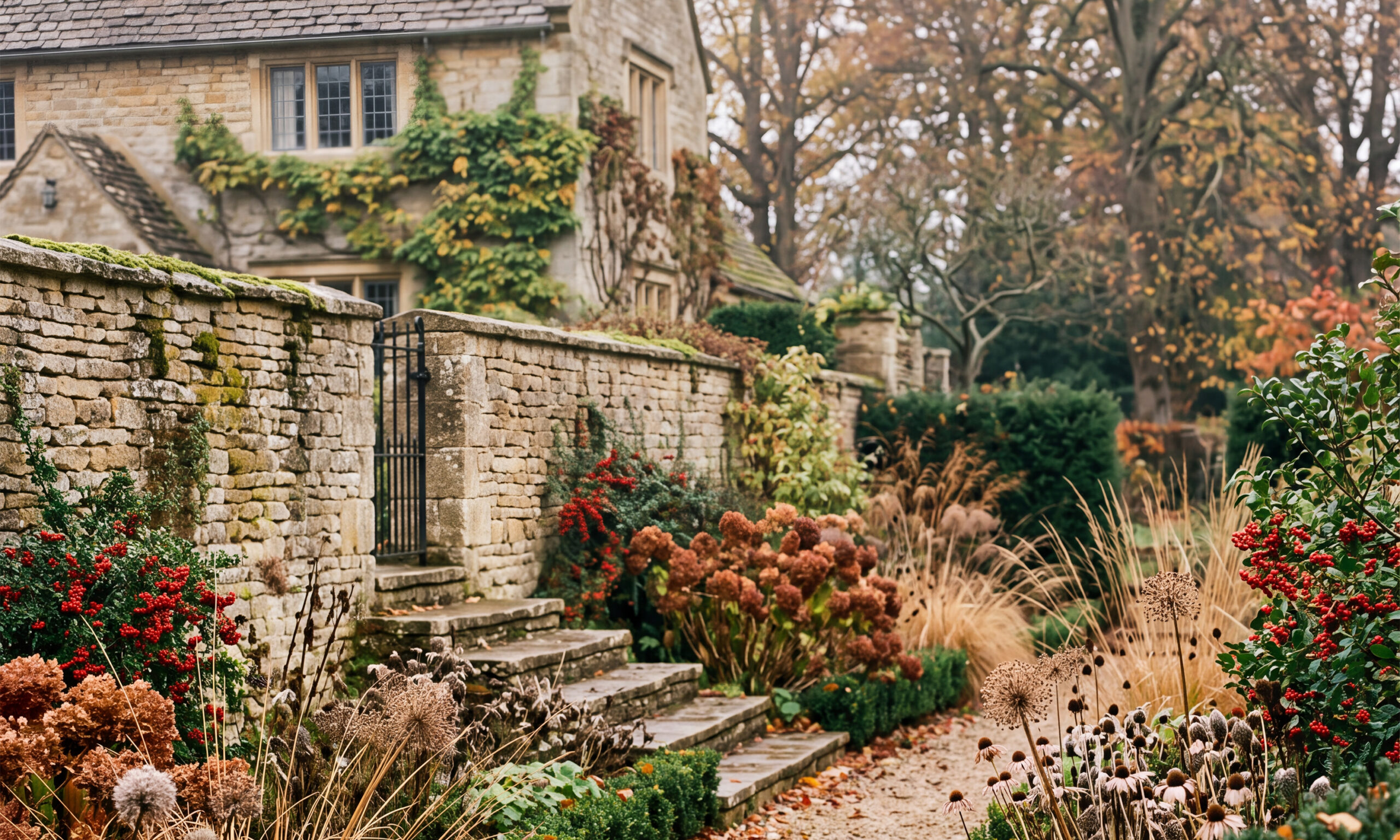
Resist cutting everything back. Strong stems and seed heads give winter gardens structure, while log piles, fallen leaves and fading plants shelter insects, amphibians and small mammals. Brown belongs in the garden, and decay is part of its cycle.
I choose plants with winter interest, including Viburnum tinus ‘Eve Price’, Viburnum ×bodnantense ‘Dawn’, sweet box (Sarcococca confusa), wintersweet (Chimonanthus praecox), witch hazel (Hamamelis ×intermedia ‘Pallida’) and winter honeysuckle (Lonicera ×purpusii ‘Winter Beauty’). Camellia sasanqua offers red, pink or white flowers. Camellia ‘Yuletide’ produces red blooms with golden anthers.
Eryngium agavifolium reaches two metres, its candelabra-like flowerheads often lasting until late January. Ornamental grasses worth retaining include fountain grass ‘Hameln’, Korean feather reed grass, feather reed grass ‘Karl Foerster’ and moor grass ‘Transparent’. The latter’s feathery spikelets shimmer in the breeze. Korean feather reed grass pairs well with the faded flowers of burnet ‘Tanna’. Joe Pye weed ‘Purple Bush’, giant ironweed ‘Mammuth’ (Vernonia crinita), Aster umbellatus (now Doellingeria umbellata), culver’s root ‘Fascination’ (Veronicastrum virginicum) and bergamot ‘Scorpion’ provide strong winter silhouettes.
Cut back selectively
Some perennials need tidying before heavy rain and strong winds damage deteriorating growth. Wind-rocked stems can damage crowns and roots. Herbaceous geraniums cut back in summer for a second flowering may still carry leaves, but these can become sodden, as can catmint (nepeta), coreopsis, helenium, campanula and artemisia. Cut collapsed stems to ground level, or just above fresh basal shoots. Removing decaying material helps reduce fungal problems and hiding places for slugs.
Clear fallen leaves from lawns and paths, where wet foliage can be slippery. Collect deciduous leaves, including oak, hornbeam and alder, for leaf mould to use as mulch or in planting holes. Shredding speeds decomposition; store leaves in a leaf bay or suitable bags. Retain some undisturbed piles for wildlife.
Protect and prepare
November is a good time to plant tulips and any remaining spring bulbs. Choose a position with good drainage. Raise containers on bricks or pot feet to prevent waterlogging, and insulate vulnerable pots with hessian secured with twine. Lift tender dahlias, begonias and gladioli where winter protection is needed. Remove dead or frost-blackened foliage, allow plants to dry and store in frost-free conditions suited to each type. Dry dahlias upside down, then store their tubers in barely damp sand or spent compost, avoiding conditions that encourage rot.
When the ground is neither frozen nor waterlogged, divide suitable herbaceous perennials. Established clumps can lose vigour after three to five years; division produces free plants for borders or containers. Replant at the original depth and mulch to protect roots through winter.
Indoors, houseplants offer greenery where outdoor space or mobility is limited, bringing colour and sometimes scent. Water according to each plant’s requirements, avoiding waterlogged compost. Some can be watered from below using a saucer.
For early Christmas gifts, look out for Mark’s books: The Thrifty Gardener, Royal Gardens of the World and The Future of Gardens. Find further inspiration at www.marklanedesigns.com.
Jobs for November
• Rake leaves and make leaf mould.
• Plant tulips and bare-root stock.
• Protect tender plants; check drainage.
• Harvest vegetables and net brassicas.
• Clean tools and check tree ties.
Dr Mark Lane is a multi-award-winning garden designer, horticulturalist and TV gardening presenter (BBC Morning
Live, BBC Gardeners’ World, the RHS Flower Shows, Channel 5). Mark is the author of The Thrifty Gardener (Quarto),
Royal Gardens of the World (Kyle Books), and the Future of Gardens (Melville), see www.marklanedesigns.com.