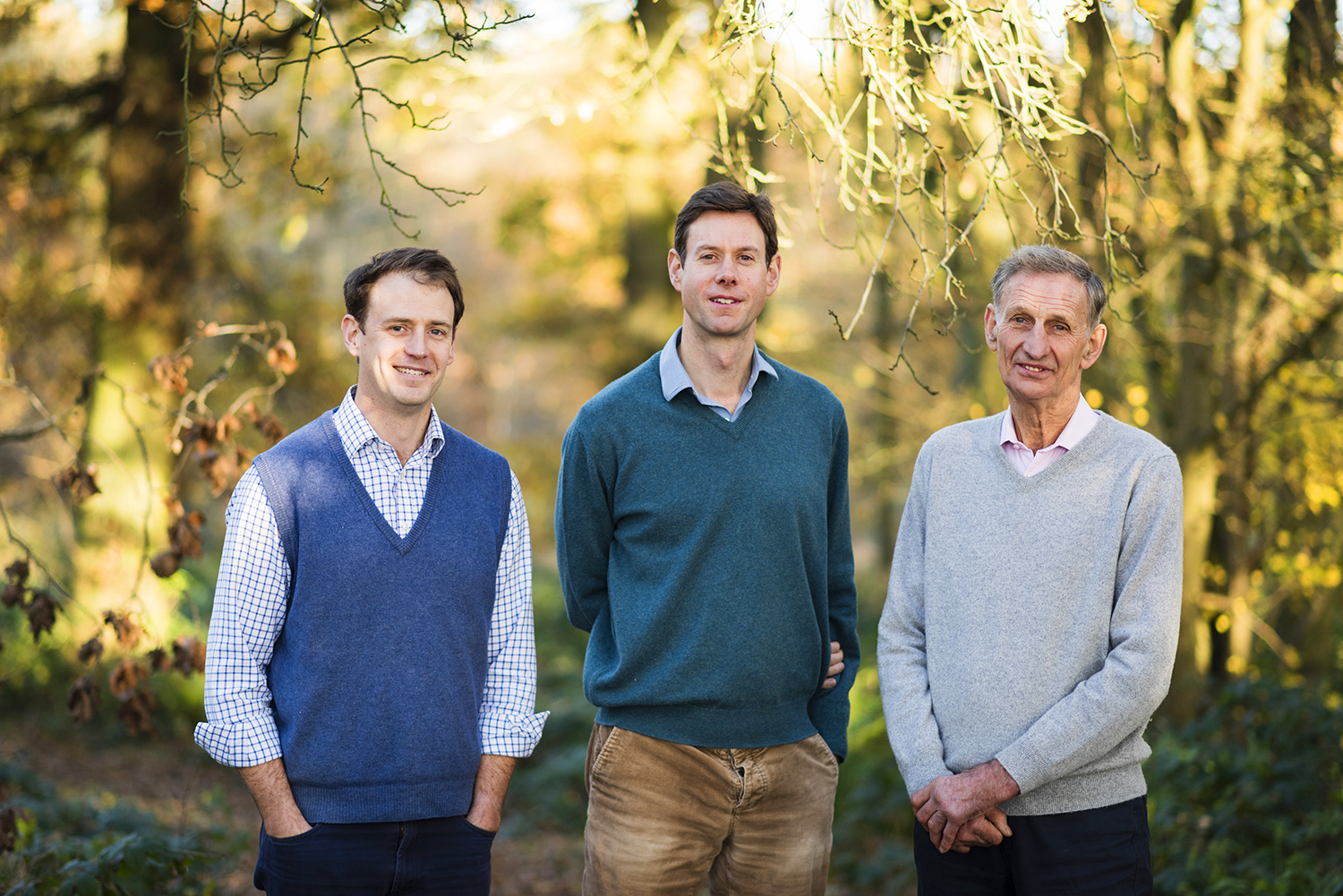
What is Wild Rutland?
A full planning application has been submitted for the creation of an ambitious nature-inspired tourism destination covering 1,000 acres. Wild Rutland is expected to attract over 335,000 visits each year, and bring £12m of revenue into the county. A likely timescale for completion is two to three years, and Wild Rutland will, say its founders, combine a one-of-a-kind conservation project with an unprecedented visitor experience. CEO Hugh Vere Nicoll, explains more…
Planning permission has been submitted for Wild Rutland, a project that aims to benefit both nature and visitors on a scale unprecedented since the creation of Rutland Water. It’s the vision of the Hanbury family, and will see the creation of a conservation and wildlife led visitor attraction covering 1,000 acres of historic parkland and woodland stretching from Burley Wood to the Oakham bypass.
At its heart, Wild Rutland aims to restore and enhance a remarkable heritage landscape, bringing back lost features and improving habitats for indigenous wildlife while conserving the land for future generations. “Wild Rutland aspires to be an exemplar model of conservation-led ecological tourism,” says CEO Hugh Vere Nicoll. “One that restores heritage landscapes, reconnects people with nature and sets a benchmark for sustainable land management in the UK.”
A major milestone
The plans have now reached a major milestone, with a full planning application submitted. Hugh describes the submission as “a very exciting moment” and the result of years of consultation, surveys and careful design. The hope is that planning approval, or at least clear feedback on any adjustments required, will be secured by the end of the year. As he acknowledges, “It’s an unprecedented scheme at this scale, so it is right that it is examined thoroughly.” If approved, the build programme is expected to take two to three years from the point construction begins; despite the fact that the site spans 1,000 acres, only a relatively small proportion of it requires construction.
The story of Wild Rutland is also the story of Hugh himself. Originally from the South West, he built a career in land and estate consultancy, with a particular focus on tourism and nature-based enterprises. As a former land agent, Hugh worked within a specialist team advising landowners on diversification, helping estates develop projects ranging from farm shops and holiday accommodation to visitor attractions and wildlife ventures.
The Hanbury family approached a land management consultant about the project in 2001. One of their consultants, Hugh, became involved during the early feasibility stages. Having worked on conservation and nature tourism projects previously, including substantial schemes overseas, he quickly recognised that Wild Rutland was on a scale and with ambition unlike anything else he’d experienced.
“There’s nothing similar”
“There isn’t really anything similar to Wild Rutland,” he says. “It is enormous in scale as a conservation nature project and that is what makes it so exciting. It’s about linking everything together in a balanced and sensitive way, suitable for the heritage and true to conservation.”
Recognising both the scale and the long term potential, Hugh made a significant decision. In 2023, he left his role to join Wild Rutland full time as CEO. “My job is to design it, get planning for it, build it, open it and run it,” he says. “This is such an exciting project. It’s great to be involved with.”
One of the most compelling aspects of Wild Rutland is the decision by the Hanbury family to pursue this path at all. A local plan had allocated a significant number of houses on part of the site, directly on the edge of the historic parkland. Instead of opting for residential development, the family chose to explore a future centred on conservation and public engagement with nature.
A very special place
“If you were simply looking to make as much money as possible with the least risk or effort, housing would of course be the option,” Hugh says candidly. “But this is a very special place to the family. Burley Wood and the land around it are deeply important to them, and this enables a way to carry on with that.”
Currently, there is no public access to either the historic park and garden or Burley Wood, which Hugh describes as the largest piece of ancient woodland in Leicestershire and Rutland. There are no public rights of way through it. Wild Rutland would change that, opening up carefully managed access so visitors can experience the landscape.
Restoration and preservation
“It’s about restoration and preservation of nature and history on this site,” he explains. “Managing woodland and historic landscape properly is an expensive undertaking. This is about stepping up the level of management and at the same time enabling people to have the right sort of access.”
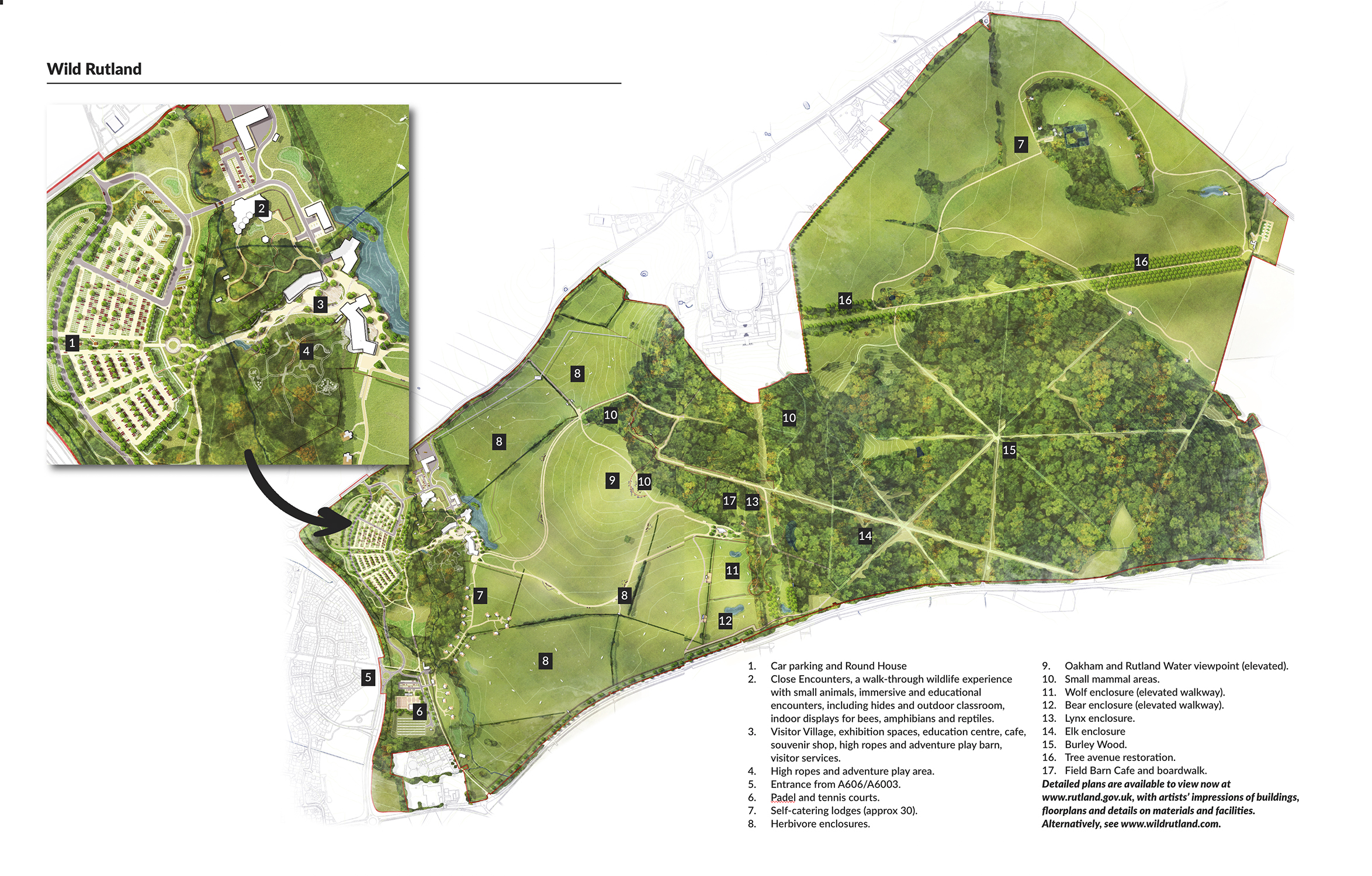
The plans include a visitor village at the western end of the site with restaurant and café facilities, education classrooms and lecture spaces, a reception building, exhibition areas and a shop. There will be nature themed indoor play connected to outdoor woodland play, with a high ropes course woven into the existing tree canopy.
Beyond the central hub, a three kilometre walking route will take visitors through meadows and large herbivore enclosures and into parts of Burley Wood itself, with an existing barn converted into a café along the route.
Historic native species
A close encounters area will allow visitors to see and understand smaller native species, including those involved in breeding and release programmes.
Meanwhile, the project also plans secure enclosures for larger native and historically present species including deer, European bison and equines. Provision is also made for wolf, bear and lynx, which have attracted understandable public attention. Hugh is clear about the reality.
“All of these are kept under a Zoo Licence. This is not about releasing wolves into the English countryside. It is about providing appropriate, secure habitats and facilitating education and conservation discussions.”
Heritage and economic benefits
Heritage is another unexpected dimension. During archaeological investigations, a Roman villa was discovered on the site. Initial excavations have taken place and further work is planned over time.
Economically, the impact could be transformative. At maturity, Wild Rutland is projected to attract 335,000 visits per year. It is expected to create 75 direct full-time equivalent jobs and bring an estimated £12 million annually into the local economy through visitor spending and wider knock-on effects for Oakham and Rutland.
With planning now submitted, the statutory consultation process is underway. As Hugh notes, “There will always be questions on a scheme of this scale. That is right and proper. We have worked very hard to provide the information needed so that the council can assess it fairly.”
If approval is granted and construction proceeds over the following two to three years, Wild Rutland would emerge as something unique in Britain. Part historic landscape restoration, part conservation initiative, part immersive wildlife experience, it would represent a deliberate choice for biodiversity over urban sprawl.
For Rutland, it could prove to be one of the most defining decisions of the decade. As Hugh puts it, “This is about creating something genuinely new, inspired by the remarkable conservation work already happening across the county. We want to create a place where landscapes, wildlife and people can coexist and thrive.”
Wild Rutland: In Brief
• A proposed nature and wildlife led visitor attraction covering 1,000 acres of historic parkland and woodland between Burley Wood and the Oakham bypass.
• A full planning application has now been submitted to Rutland County Council, with a decision or feedback expected later this year
• Wild Rutland is estimated to attract around 335,000 visits per year once fully established. It is forecast to create 75 full time equivalent jobs directly and it is predicted to bring around £12 million annually into the local economy through visitor spending and wider tourism benefits.
• Planned facilities include a visitor village with café and restaurant spaces, exhibition areas, a shop and education and classroom facilities plus 30 self-catering woodland lodges.
• Construction is expected to take two to three years once planning approval is granted.
Detailed plans are available to view now at www.rutland.gov.uk, with artists’ impressions of buildings, floorplans and details on materials and facilities. Alternatively, see www.wildrutland.com.