Magna Radio: John Marshall is back!
As Pride goes to press, a new radio station will begin broadcasting to the county, aiming to bring back personality-led radio and some of the area’s best-loved presenters. This month we’re going behind the scenes as Magna Radio prepares to make its first broadcast
As Pride goes to press, a new radio station will begin broadcasting to the county, aiming to bring back personality-led radio and some of the area’s best-loved presenters. This month we’re going behind the scenes as Magna Radio prepares to make its first broadcast
‘Stop!’ That might be the first song you hear when John Marshall returns to the radio as Pride goes to press. That may seem discordant as Magna Radio makes its debut, with the team undoubtedly anticipating getting off to a great start, but it’s the title of his favourite song by Erasure, the 1980s synth-pop group of which John is well-known to be a superfan.
Moreover, the song begins with the line ‘We’ll be together again,’ which is apt for a station intended to reunite some of Lincolnshire’s most popular radio presenters.
Magna Radio will begin broadcasting on Sunday 8th February, and will be on air seven days a week, 24-hours a day. The company’s halo station, Magna, promises a lively mix of music and broadcasting personalities with local news, weather and travel. A second station, will also be on air; the predominantly music-focused Magna Mix.
The station’s creator is Tom Priestley, an electrical engineer who has had some experience as a radio presenter too. He can fill in as a presenter at Magna, but he says he doesn’t aspire to be a regular on air, preferring to remain in the background.
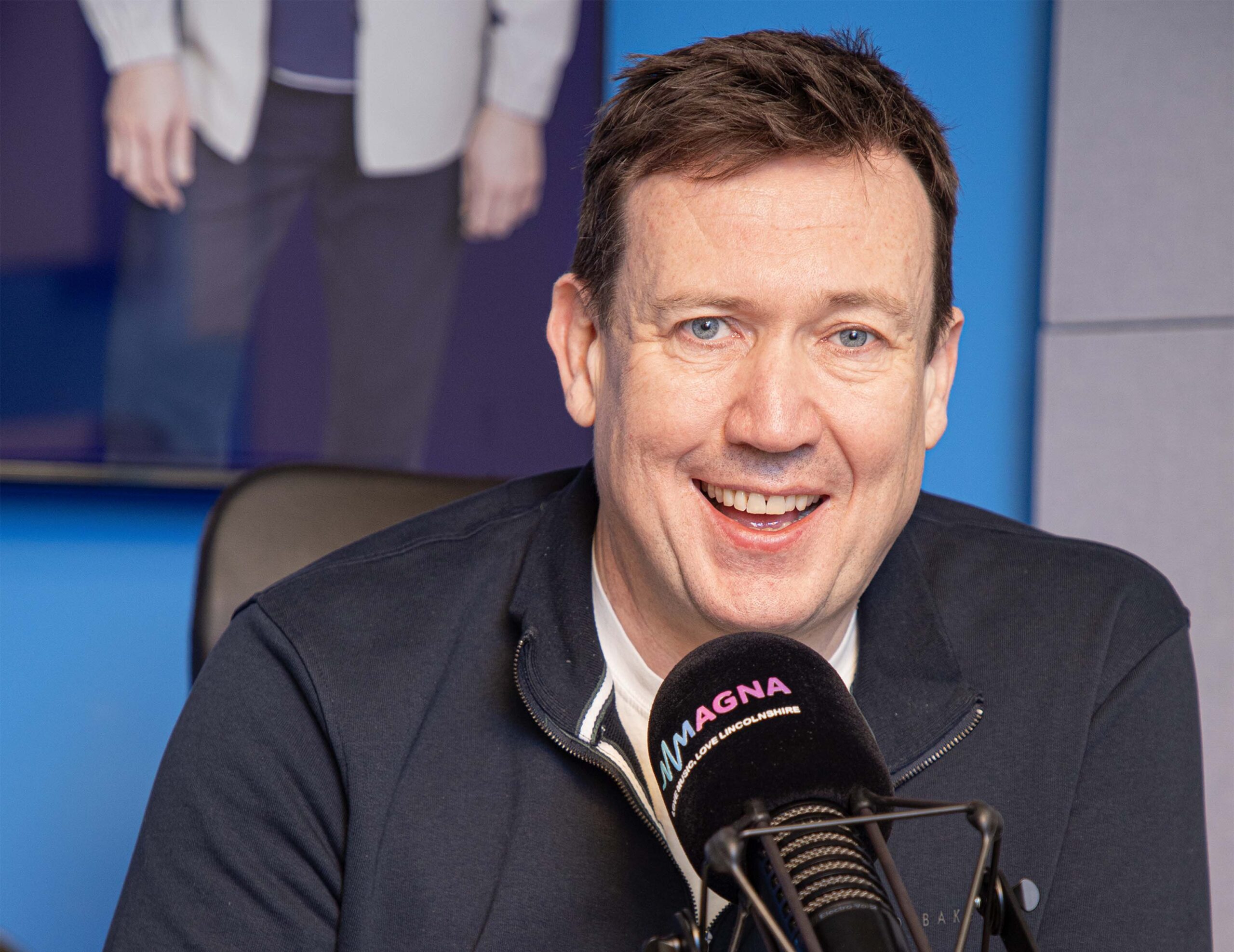
Tom wanted to create a new station to serve Lincolnshire and began assembling his team, including one of the best-known broadcasters who will put his name to their show on Magna Radio, John Marshall, who will be on air from 10am-2pm on weekdays.
Back in September, Tom invited John for a full English breakfast at Fenland Hideaway and over Lincolnshire sausages, decent bacon and hash browns, convinced him that quality, personality-led radio could return to the county.
There had been talk of creating other radio stations before, but this was the one offer that John believes has the vision, and the financial investment in equipment (which runs to multiples of six figures) to create a home for independent commercial radio in the county.
We joined Tom and John at the station’s studios at the University of Lincoln-owned Think Tank building, which opened in 2009, just off Lincoln’s Ruston Way. And though we knew it was yet to be kitted out, what we didn’t realise was that it was also John’s first time seeing the space that will become Magna Radio’s studios.
“I was born and raised in Lincoln, educated here and I live on the outskirts of the city… I absolutely love the place,” he says. “I didn’t get on especially well at school, but it was a great time for music and I worked in pubs and clubs around the city, spending three years working at Pinellas on Brant Road.”
“It wasn’t just DJ-ing, playing out music, it was introducing live acts, doing the disco… more importantly perhaps, it was performance, and timing and getting a feel for what people wanted. A career as a club DJ can be intense but short, and it seemed that radio was a natural step, providing a longer career and more variety.”
Today there are a number of universities offering media/broadcast-orientated degrees including the University of Lincoln’s own Sound & Music Production, Journalism and Media Production courses.
There are, unfortunately, also fewer jobs in the industry given the trend of larger media brands buying up local stations and replacing local content with national output and branding… a commercial trend that Magna Radio is keen to abrogate in Lincolnshire.
In John’s day, though, media degrees weren’t the way into a radio career. Hospital radio and volunteering were a more common way to get a foothold in the industry.
“I did hospital radio at Lincoln County, volunteering every week for three years, and sending off demo tapes to radio stations.”
“BBC Radio Lincolnshire had launched in 1980, with Lincs FM offering a commercial station to listeners from its launch in 1992 and eventually David Lloyd, who was instrumental in establishing Lincs FM, offered me a trial and eventually a slot from 5am-7am on a Sunday morning… that was around 1996.”
At the time, John was working elsewhere and was taking time off from his ‘day job’ to cover Lincs FM shifts in the event of holidays and staff sickness.
He joined the station full time not only working to cover absent presenters but to offer IT support at the station with its rather underutilised computer systems. Lincs FM continued to be a success commercially as well as being popular with listeners, and John was equally successful, taking over the breakfast show from 1997 and broadcasting initially from 5am-9am, and later working on the later slot from 10am-2pm.
Lincs FM also had a number of sister stations (Compass, Trax, and Rutland Radio), and the group was soon eyed-up by Bauer, keen to assimilate those stations into their Greatest Hits Radio brand, making their stations more attractive for lucrative national advertising campaigns.
The inevitable consequence was delayed by an Ofcom rule which required at least three hours of output from a radio station like Lincs FM to be local in nature, but when that protection was removed in October 2024 many local stations which had already lost their individual identity also saw their presenters replaced by national broadcasters like Ken Bruce and Simon Mayo.
“Radio has changed enormously since I was first on air with Lincs FM,” says John. “It’s a bit of a contradiction really.”
“Technically it’s easier than ever to broadcast, with streaming services putting music at your fingertips and computers allowing you to play out directly. But commercially, it’s a very different story. Monetising a radio station is increasingly challenging in an environment where radio is competing with podcasts and on-demand radio.”
“What hasn’t changed though is the unique quality that radio has over just listening to music. When I started at Lincs FM there were huge racks of CDs. You had to physically load them in and cue the music up.”
“There were separate systems for jingles and adverts, and carts (old magnetic tape cartridges) for playing out material. All of the music had different levels so you had to prefade songs and adjust the volume manually… there was even a record player in the corner of the studio!”
“Today you’ve apps like Spotify or Apple Music that can put any song you can think of in easy reach. And yet, people still listen to the radio, because of the human who talks to you and keeps you company in between songs, and keeps the experience dynamic and personal.”
“Anyone can create a playlist and play it out, one song after another. But a good presenter is the point of difference from just streaming music, giving the listener moments that can’t be replicated, from anecdotes to make you laugh and shared references to Lincolnshire, to in-jokes between presenters. That’s what we want to offer with Magna Radio and we’re fortunate that Tom shares an appreciation for the medium too.”
With around 20 people working on the station including 14 presenters, Tom says that during his career he too has enjoyed being behind the microphone but has no real desire to become a presenter.
“It isn’t a hobby or a passion project,” says Tom. “We’ve made a big investment in the station and I don’t want to create a station that just sounds good, I want to ensure it works commercially and serves its community well, delivering local content and supporting local businesses.”
“I also want it to be a place where professional broadcasters can enjoy a proper career, with professional standards and where broadcasting is a craft, not a hobby.”
“John and the rest of the team know that craft and they know their audience, such talent must be trusted and radio mustn’t be reduced to isolated presenters in their spare rooms and to pre-recorded or automated radio. Our motivation is to provide a local service that has been lost and to create proper jobs.”
Meanwhile, John says he’s desperate to be back in the studio, engaging with listeners and keeping Lincolnshire company whether the listener is in the car, in the office or waking up in the morning to the sound of Magna Radio.
“It’s a busy time and I think we’re all keen to see the space change from an empty office to a living, breathing studio. We’re already having great meetings about which features to bring back, ways to engage with the local community and what music we’re keen to play. Between new technology that makes broadcasting easier than ever, and a team that’s dedicated to bringing back personality-led radio, we’re all really excited for the launch!”
Magna Radio and Magna Mix will begin broadcasting from the company’s Lincoln studios on DAB from 8th February. For more information on the station see www.magnaradio.co.uk. John Marshall will be on air weekdays from 10am-2pm.
Read our full feature in the March edition of Lincolnshire Pride, available at https://www.pridemagazines.co.uk/lincolnshire/view-magazines?magazine=March-2026