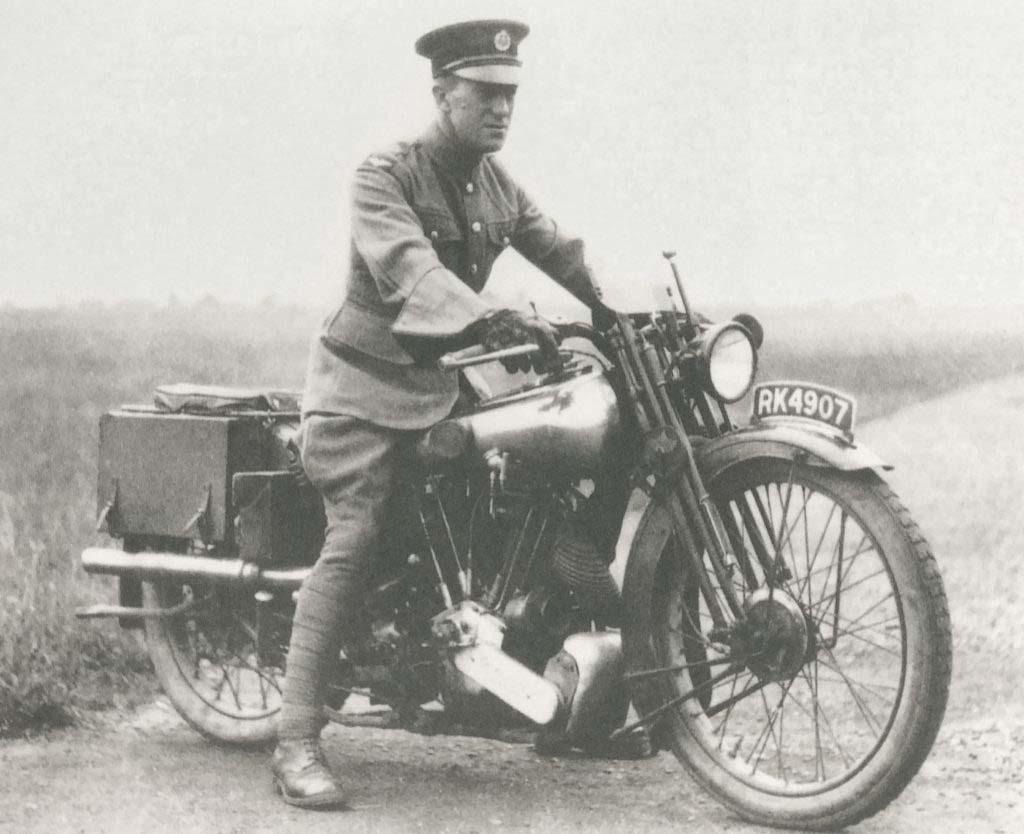
T E Laurence of Arabia and Lincolnshire
In our March 2025 edition we paid a visit to Hobbsons on Steep Hill for our monthly Dining Out feature. We were following in the footsteps of British Army officer, archaeologist and writer TE Lawrence, who was stationed at RAF Cranwell in 100 years ago… he became very fond of Uphill Lincoln and the rest of the county, especially it’s motorcycle-friendly roads!
Few figures loom as large in the British imagination as Thomas Edward Lawrence, the soldier scholar immortalised as Lawrence of Arabia. Yet for all the sun scorched heroics of the Middle East, one of the most formative and restorative chapters of his life unfolded far from the desert, among the big skies and long roads of Lincolnshire. It is a connection quietly woven into the county’s landscape, and one that lends a particular resonance to the commemorative plaque displayed on this month’s featured restaurant, Hobbsons.
In the years following World War One, Lawrence was arguably the most famous man in Britain. His role in the Arab Revolt and his uneasy relationship with political power left him celebrated, scrutinised but conflicted.
Rather than embrace celebrity, he sought obscurity and discipline, enlisting in the Royal Air Force under the assumed name of Aircraftman T E Shaw. This search for anonymity brought him to RAF Cranwell, the officer training college set amid the gently rolling countryside of central Lincolnshire.
Cranwell offered Lawrence something he desperately needed. After years of strain, imprisonment and disillusionment, the routines of service life and the openness of the county provided a measure of calm. It was here that he immersed himself once more in writing, working on his memoirs and revisiting elements of Seven Pillars of Wisdom, the monumental account of his wartime experiences. Lincolnshire gave him space to think and to order his memories, away from the glare of public attention.
It also gave him roads. Lawrence was passionately devoted to his Brough Superior motorcycle, affectionately known as the Boa, and the county became his personal circuit. He rode out from Cranwell whenever duty allowed, following straight Roman routes and winding lanes with equal enthusiasm.
The A15 near Lincoln, one then of England’s longest and fastest roads, fired his imagination and his pen. In his later book The Mint, he described racing along it in 1925 against a Bristol fighter aircraft, the roar of his engine and the rush of cold air capturing both his love of speed and his vivid literary style.
Lincoln itself became a regular destination. Lawrence lodged near the top of Steep Hill, relishing the climb, the view and the chance to disappear into the city as an ordinary man. He wrote of washing his head with cold water outside the White Hart and taking simple refreshments in local cafes. From Lincoln he would ride on through Newark, Nottingham and then back towards Sleaford, calling at farms for eggs and bacon, enjoying the freedom of movement and the everyday exchanges that fame elsewhere denied him.
Those months in Lincolnshire were among the happiest of his later life. He valued the camaraderie at Cranwell and the unassuming character of the surrounding villages, which he described with dry affection.
Eventually his true identity was uncovered and he was forced to leave, but the county left a lasting imprint on him. Lawrence retired to Dorset in 1935 and died later that year after a motorcycle accident, still in pursuit of the speed and solitude he loved.
Today, the presence of his plaque is more than a historical footnote. It is a reminder that Lincolnshire was not merely a backdrop, but a refuge, a workshop and a testing ground for one of the twentieth century’s most complex figures.
Read our full feature in the March edition of Lincolnshire Pride, available at https://www.pridemagazines.co.uk/lincolnshire/view-magazines?magazine=March-2026