Celebrating Boston
As Pride goes to press, celebrations are taking place about 3,230 miles away. In the US, a population of about 350 million people is preparing to celebrate the semiquincentennial anniversary of the 56 signatures to the Declaration of Independence. The result was immediate independence from the British Crown, the assertion of universal human rights, and the setting of the stage for a new world order in which the US, Britain, France and Spain would emerge as new global powers.
In Boston, Lincolnshire, the 4th July will have passed by largely unnoticed. Comparatively small compared to Massachusetts, with its city population of 670,000 and greater metropolitan population of over 5m, our Boston is home to about 50,000 in the town itself and about 75,000 across the Borough.
Nonetheless, the town is still proud of its footnote in world history, as evidenced by work to restore and encourage the community to value the buildings that best reflect its heritage.
To be a Pilgrim
In 1607, Boston’s Pilgrim Fathers, a group of religious Separatists seeking freedom from the constraints of the Church of England, attempted to leave England from the town’s busy port. Their planned voyage to the Netherlands was betrayed and around 100 men, women and children were arrested and held in Boston Guildhall, then the town’s courthouse and administrative centre. After a short period of detention they were released, and many successfully reached the Netherlands the following year. Some members of the group, including William Bradford and William Brewster, would later sail aboard the Mayflower in 1620 and help establish Plymouth Colony in New England.
Today, the Guildhall is open to visitors, Grade I listed and dating back to the 1390s. Visitors can see tracery in the banqueting hall, Georgian-style decor and panelling plus a collection of impressive artwork including paintings.
Brewster Road, Bradford Road and Winslow Road commemorate leading figures associated with the Pilgrim story, while John Adams Way honours the second President of the United States, linking the town not only to the earliest English settlers in New England but also to the later creation of the American republic. The group is also remembered by the Pilgrim Fathers Memorial on Haven Bank, unveiled in 1957.
More than 150 years later, Lincolnshire again contributed to America’s story through Thomas Paine. Living and working in Grantham as an excise officer before emigrating to America, Paine became one of the most influential advocates of independence. His pamphlet Common Sense, published in 1776, helped galvanise support for the creation of the United States.
Fydell House
Standing beside Boston Guildhall, Grade I-listed Fydell House is currently undergoing a major £2.3 million restoration led by the Boston Preservation Trust, the organisation that saved the building from demolition in the 1930s and continues to protect Boston’s architectural heritage.
The ten-month project, supported by a £1.6 million grant from The National Lottery Heritage Fund, will address longstanding structural, weather and wartime damage while upgrading heating and electrical systems. Improvements will also include better accessibility to both the house and gardens, new visitor facilities, volunteer training space and enhanced community use.
Built in 1702, the Queen Anne townhouse is expected to reopen soon following one of the most significant heritage investments in Boston for many years.
A place to belong
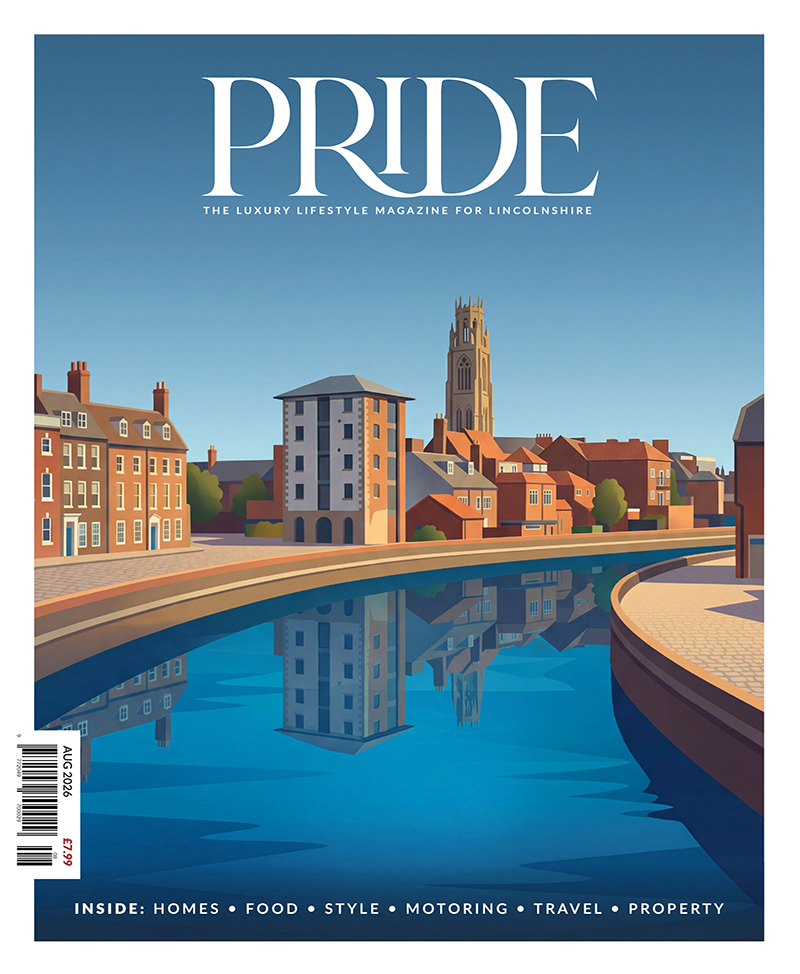
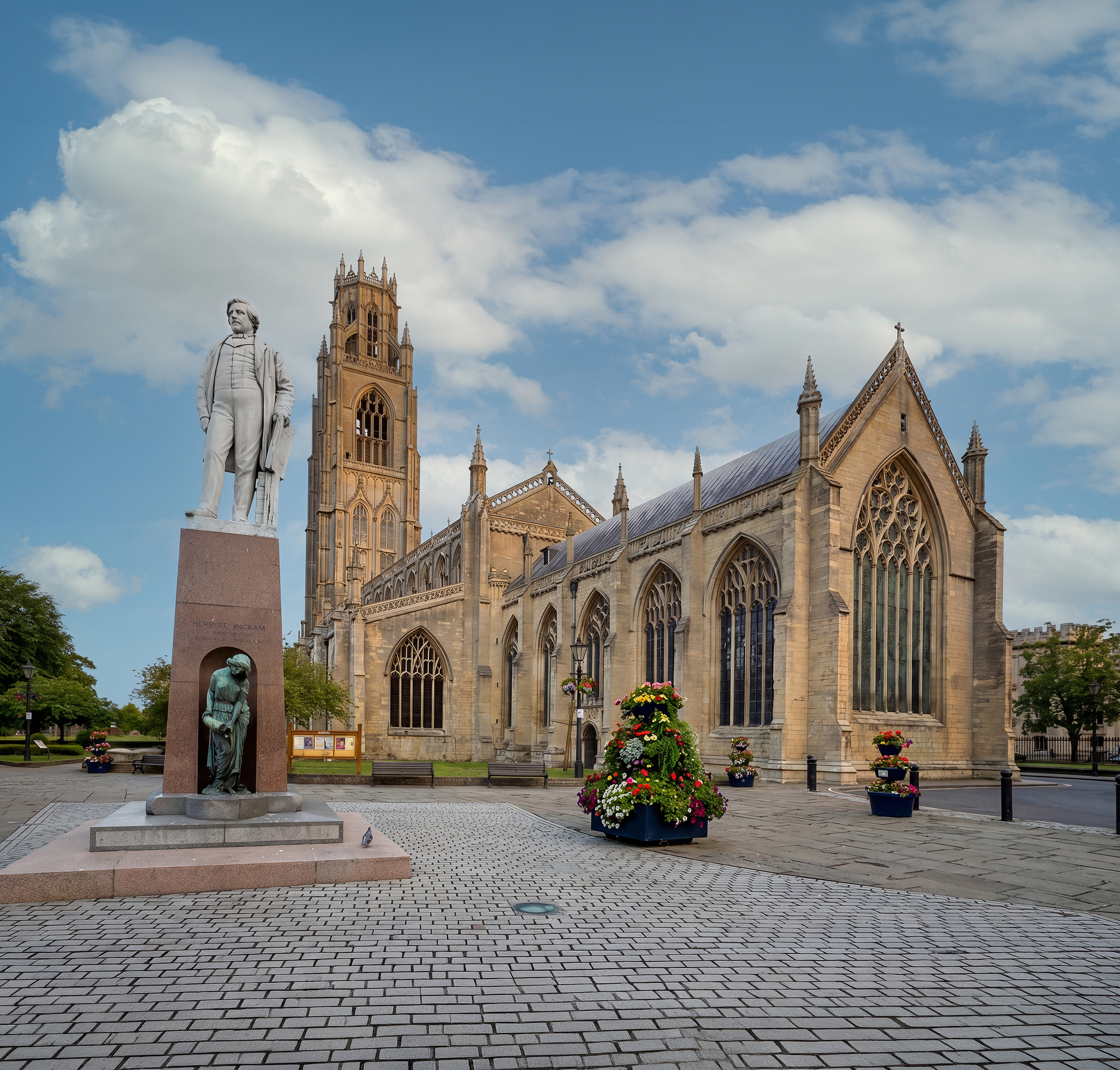
St Botolph’s Church, better known as Boston Stump, remains the town’s defining landmark, attracting around 75,000 visitors a year. Built between 1510 and 1520, its 266ft/81m tower still dominates the skyline. By the end of summer, new LED lighting will enable the church to be illuminated in different colours, including in memory of loved ones.
The Stump has also launched new high-level tours, taking visitors beyond the viewing gallery to the top of the lantern for panoramic views after climbing 365 steps; more dates are due to be released as Pride goes to press. Inside, the church’s library includes 1,600 books, among them Chaucer volumes from 1542.
Sibsey Trader Mill
Just five miles north of Boston, Sibsey Trader Windmill has recently reopened following a five-year restoration by English Heritage. Built in 1877, it was one of the last windmills constructed in Lincolnshire and remains one of the few six-sailed mills in England. Standing 22 metres tall, the six-storey tower contains three millstones and operated commercially until 1953 before falling into disrepair. Taken into state care in 1975, the mill suffered significant storm damage in 2018.
Restoration specialist Tim Whiting of Suffolk Millwrights has overseen the rebuilding of the cap, sails and curb, while removing black coal tar coating to reveal the mill’s repointed red brickwork, returning a Lincolnshire landmark to full working order.
Rosegarth Square
Rosegarth Square is at the heart of a £14.8m regeneration programme that will transform a neglected area between West Street and St Botolph’s Church and the Witham into a new public space for residents and visitors.
The scheme includes landscaped green spaces, new pedestrian routes, public art, community seating, improved access, and the redevelopment of the former Crown House site with commercial space and new homes.
New south stand for Boston United
Boston United’s Jakemans Community Stadium is moving closer to completion with work under way on a new South Stand and community sports hub, described by the club as the final phase of the stadium’s development. The £4 million project, supported through Government funding and local partnership investment, will provide additional spectator facilities, create a new home for away supporters and add community sports and leisure facilities.
Other improvements…
Elsewhere in the town, Boston will soon be gaining a new £14.4m leisure centre and fitness suite funded through the Government’s Levelling Up Partnership and Boston Town Deal programmes. The development is due to be completed in early 2027, and is located opposite the town’s new Eden Mayflower development, a community hub run by Boston College and offering quality dining out courtesy of the college’s Catering & Hospitality students and hair & beauty treatments courtesy of level-three students.
And finally, Boston’s historic Grand Sluice, built in the 1760s, is also undergoing a £15 million refurbishment programme led by the Environment Agency, helping to protect around 9,000 homes and more than 25,000 hectares of farmland from flooding. The project will replace the sluice’s ageing gates and will be carried out in phases with completion expected around 2029.