Leicestershire & Rutland Wildlife Trust
This summer marks a remarkable milestone for Leicestershire & Rutland Wildlife Trust. In 2026, the organisation celebrates 70 years since its foundation, alongside two other significant anniversaries: 50 years since the creation of Rutland Water Nature Reserve and 30 years since the launch of the pioneering Rutland Osprey Project.
Together, the anniversaries provide an opportunity to reflect on one of the region’s most significant conservation success stories. Today, the Trust manages more than 30 nature reserves covering around 3,000 acres, supported by 34 members of staff, 700 volunteers and 20,000 members across Leicestershire and Rutland.
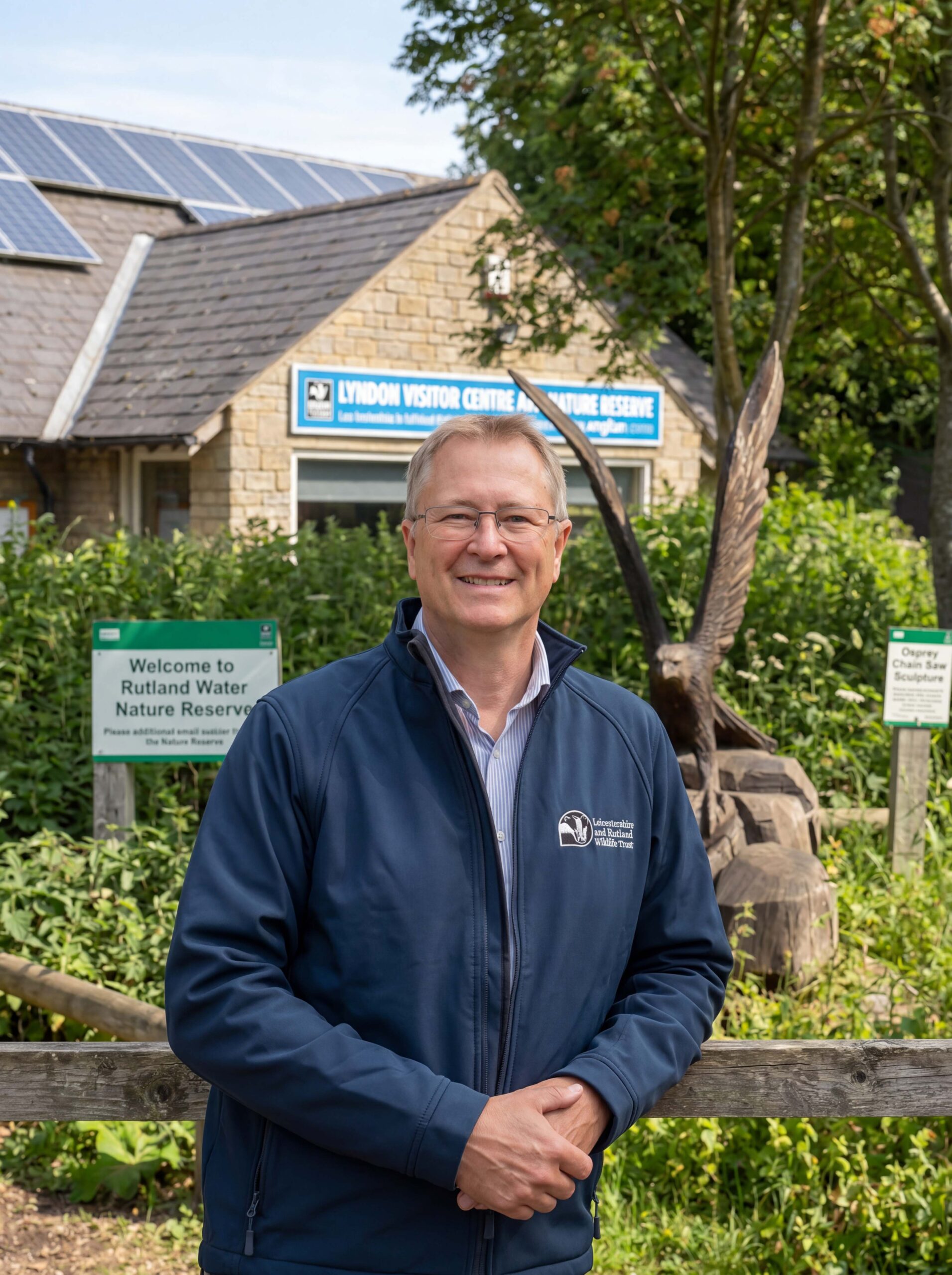
Leading the organisation is Chief Executive Mat Carter, who describes the role as his dream job after a career spent with organisations including Natural England, the Environment Agency, the National Trust and the Wildfowl & Wetlands Trust.
“The attraction for me was coming to an organisation where we can see local actions, real improvements on the ground and make a difference to sites,” says Mat. “Wildlife Trusts are really good at that because they are local organisations working on local landscapes.”
Bigger, Better and More Connected
The Trust’s reserves range from ancient woodland and species rich grassland to wetlands and lakes, providing habitats for an extraordinary variety of wildlife. Rutland Water Nature Reserve remains one of the region’s richest sites for biodiversity, and this summer marked a special milestone with the Big 50 Wildlife Recording Event, held as part of celebrations for the reserve’s 50th anniversary.
Over 50 hours, wildlife experts, local naturalists and visitors worked together to record as many species as possible, bringing the reserve closer to its ambitious ‘5,000 in 50’ challenge, the goal of reaching 5,000 recorded species in the reserve’s history by the end of 2026.
The event also highlighted the importance of community science, with an identification hub helping visitors contribute valuable records. Every new species recorded strengthens our understanding of the reserve and helps guide future conservation, ensuring Rutland Water continues to thrive as one of the country’s most important places for wildlife.
The Success of Rutland Water
Rutland Water remains the Trust’s flagship reserve and one of the country’s most important nature conservation sites. The reserve was established alongside the construction of the reservoir half a century ago and has since become internationally recognised for its wildlife.
“It’s a fabulous county,” says Mat. “The more I’ve been here, the more I keep discovering really interesting areas and new places.”
Today the reserve attracts thousands of visitors annually while continuing to support an extraordinary range of wildlife. The diversity reflects the geology and landscapes found across Leicestershire and Rutland.
“I think Leicestershire and Rutland has some of the most diverse habitats across the UK,” says Mat. “That gives you an incredibly diverse mixture of species and habitats.”
The Trust carefully balances conservation with public access. “People won’t value what they don’t experience,” says Mat. “We want people to value nature and fight on its behalf. In order to do that, they need to see it, understand it and enjoy it.”
Thirty Years of Ospreys
The most celebrated conservation achievement associated with Rutland Water is undoubtedly the Rutland Osprey Project. Launched in 1996 under the leadership of former reserve manager Tim Appleton, the project saw young ospreys translocated from Scotland to Rutland in an ambitious attempt to restore breeding populations to England. Thirty years later, the results have exceeded expectations.
The project, developed through a partnership between the Trust and Anglian Water, has helped establish a healthy breeding population centred on Rutland Water.
One of the reserve’s best known residents is Maya, a female osprey whose nest continues to attract global interest through the reserve’s live cameras.
“She’s done an amazing job of continually coming back to the site and successfully breeding,” says Mat. This year, Maya is once again raising three chicks at Manton Bay, adding to one of Britain’s greatest modern conservation success stories.
The Power of Partnerships
Partnership working has been central to many of the Trust’s achievements. Mat is keen to challenge the perception that conservation and development must always be in conflict. “It doesn’t have to be growth or nature,” he says. “It can actually be both.”
The Trust works closely with farmers, businesses, developers and landowners to improve habitats beyond its own reserves. Recent projects include partnerships with housebuilders David Wilson and the Greener Golf initiative, which helps golf clubs enhance biodiversity across their courses.
“We can’t see nature recover on our own,” says Mat. “We need all those other organisations and individuals interested in supporting that work.”
As the Trust celebrates its landmark year, the focus remains firmly on the future. “We want everybody to become a champion for nature,” says Mat. “That happens when people get out onto sites, experience wildlife and see the value and joy that it brings.”
“We’re lucky to have so many sites, a really well-received magazine and, these days, so many ways to keep in touch with our members to ensure everyone can feel enfranchised in experiencing the natural world.” www.lrwt.org.uk